
Who Is the Richest President in the World in 2026?
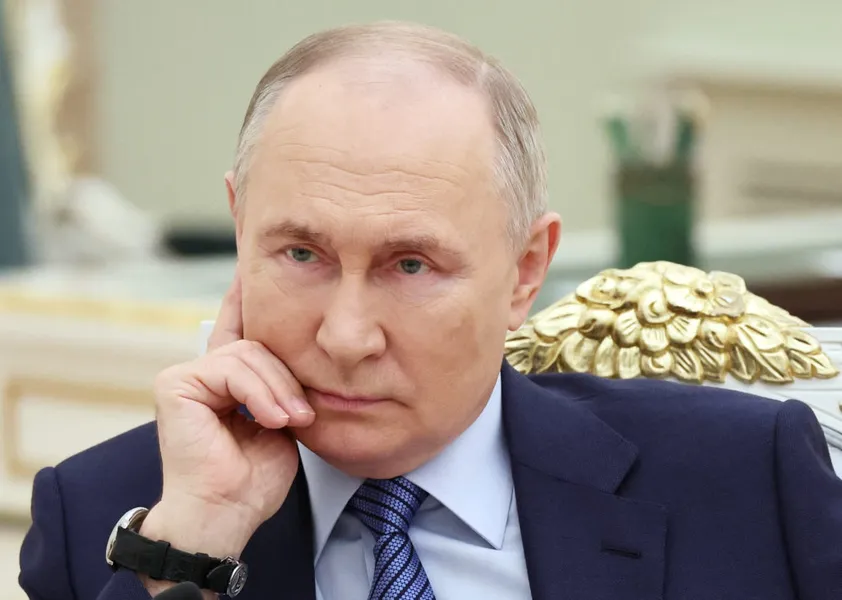
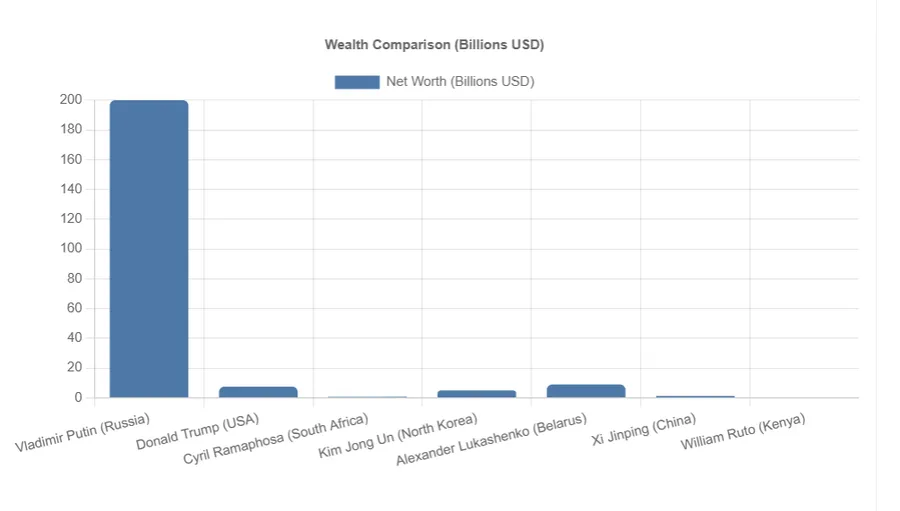
As of early 2026, Vladimir Putin stands out as the richest president in the world, with estimated wealth exceeding $200 billion, though much remains unverified due to opacity. Among democratically elected presidents with clearer disclosures, Donald Trump leads with a net worth around $7–8 billion, boosted by real estate, media, and emerging digital assets.
Wealth and political power have always gone hand in hand, but in 2026 the gap between official salaries and personal fortunes tells fascinating stories. From energy empires in authoritarian states to branding empires in democracies, the richest presidents in the world blend state influence, inherited assets, and smart investments. Understanding these fortunes reveals much about global economics, transparency, and the blurred lines between public service and private gain.
Quick Comparison Table – Top 10 Richest Presidents in the World (2026)
| Rank | President | Country | Est. Net Worth |
|---|---|---|---|
| 1 | Vladimir Putin | Russia | $200B+ |
| 2 | Donald Trump | United States | $7–8B |
| 3 | Kim Jong Un | North Korea | $5–10B |
| 4 | Teodoro Obiang Nguema Mbasogo | Equatorial Guinea | $600M–$940M |
| 5 | Alexander Lukashenko | Belarus | $9B (est.) |
| 6 | Ilham Aliyev | Azerbaijan | $500M+ |
| 7 | Paul Kagame | Rwanda | $500M (est.) |
| 8 | Cyril Ramaphosa | South Africa | $450–700M |
| 9 | William Ruto | Kenya | $250–500M |
| 10 | Xi Jinping | China | $1–1.5B (est.) |
How Presidential Net Worth Is Calculated (Methodology)
Estimating the **net worth** of sitting presidents is one of the most challenging tasks in financial journalism and analysis. Unlike celebrities or business tycoons who often have public portfolios, presidents operate in environments shaped by **varying disclosure rules**, **hidden assets**, **family holdings**, and intense **political sensitivities**. In democratic nations, mandatory filings provide a baseline, but in authoritarian or semi-transparent systems, much of the wealth is deliberately obscured through proxies, offshore entities, or state-controlled mechanisms. Reliable figures therefore emerge only after layering multiple independent sources to create a more realistic — though still approximate — picture.
- Public financial disclosuresrequired in open democracies like the United States, where presidents must submit detailed annual reports under ethics laws, offering verifiable snapshots of assets, liabilities, and income.
- Investigative journalismfrom high-authority outlets such as **Forbes**, **Bloomberg**, **Reuters**, and **The New York Times**, which combine court records, leaks, and expert interviews to track fortunes over time.
- Major data leaks like the **Panama Papers** (2016), **Paradise Papers** (2017), and **Pandora Papers** (2021), which exposed offshore structures used by political elites to conceal wealth from public scrutiny.
- Corporate shareholding recordsand **real estate valuations** pulled from public registries in countries with transparent property markets, helping quantify holdings in luxury villas, commercial buildings, or stakes in private companies.
- Influence over sovereign wealth fundsor state enterprises in non-transparent regimes, where leaders exert de facto control over national resources (oil, gas, minerals) that indirectly translate to personal enrichment.
- Adjustments for political risk, international **sanctions**, currency devaluation, asset freezes, and deliberate concealment tactics, which can dramatically alter perceived values year to year.
In **non-transparent regimes**, net worth estimates can swing wildly — sometimes by tens or even hundreds of billions — because of limited access to banking records and the use of loyal intermediaries or shell companies. By contrast, **elected leaders in open systems** benefit from mandatory filings and independent audits, delivering higher accuracy. Even here, though, **market fluctuations** (stock volatility, real estate shifts, crypto swings) can cause rapid changes, as seen with figures whose wealth ties heavily to private enterprises or digital assets. Ultimately, these calculations blend hard data with informed expert judgment, always acknowledging the inherent uncertainty in political wealth tracking.
Top 10 Richest Presidents in the World – Detailed Profiles (2026)
#1 Vladimir Putin (Russia)
Estimated Net Worth (2026): **$200B–$258B** (largely unverified and highly disputed)
Official Salary: Approximately **$140,000** annually, reflecting the modest public salary typical of Russian state officials.
Primary Wealth Sources: Vast influence over Russia's **energy sector** giants like **Gazprom** and **Rosneft**, strategic control of natural resources, alleged **offshore holdings** routed through trusted proxies and family networks, and decades of accumulated investment webs in real estate, yachts, palaces, and foreign companies. Experts point to indirect ownership structures that allow Putin to benefit from national wealth without direct personal titles.
Transparency Level: **Low** — official declarations show minimal assets, but investigative reports suggest extensive concealment.
Key Controversies: Persistent links to the **Panama Papers** and **Pandora Papers**, which revealed networks of associates holding luxury properties and billions in assets; ongoing **Western sanctions** since 2014 (intensified post-2022) targeting alleged hidden fortunes; and reports of opulent lifestyles (Black Sea palaces, private jets) contrasting sharply with public modesty claims. Despite denials, independent analysts view Putin's control over immense state resources as the foundation of one of the world's most enigmatic fortunes.
#2 Donald Trump (United States)
Estimated Net Worth (2026): **$6.5B–$8B** (fluctuating with markets)
Major Wealth Drivers: The **Trump Organization**'s extensive **real estate portfolio** (hotels, golf courses, commercial towers), stakes in **Trump Media & Technology Group** (Truth Social parent), ongoing **brand licensing** deals, hospitality ventures, and rapidly growing **crypto/digital asset** initiatives launched during his second term.
2026 Performance Indicators: Significant **media stock volatility** tied to political events, recovery in **NYC commercial properties**, and substantial gains from **crypto projects** benefiting from pro-business policies. Recent disclosures show crypto and token sales adding billions, though offset by declines in some traditional holdings.
Transparency Level: **High** — thanks to mandatory U.S. public filings, ethics disclosures, and ongoing media scrutiny.
#3 Kim Jong Un (North Korea)
Estimated Net Worth (2026): **$5B–$10B** (speculative due to extreme secrecy)
Primary Wealth Sources: Tight **state-controlled resources** (rare earth minerals, arms trade), **illicit international networks** evading sanctions, and **family dynasty assets** channeled through overseas accounts, embassies, and front companies.
Transparency Level: **Extremely Low** — virtually no public data exists.
Key Controversies: Persistent **sanctions evasion** tactics, reports of luxury imports (yachts, cars, estates) amid widespread national poverty, and intelligence estimates tying personal enrichment to regime survival strategies.
#4 Teodoro Obiang Nguema Mbasogo (Equatorial Guinea)
Estimated Net Worth (2026): **$600M–$940M**
Primary Wealth Sources: Decades of **oil and gas revenues** from one of Africa's richest per-capita nations, **family-owned real estate** in Europe and the U.S., and direct resource exploitation benefiting close relatives.
Transparency Level: **Low** — limited disclosures despite international pressure.
#5 Alexander Lukashenko (Belarus)
Estimated Net Worth (2026): **Up to $9B** (estimated)
Primary Wealth Sources: Long-term **control over state enterprises**, alleged family-linked businesses in agriculture, manufacturing, and trade, plus benefits from close ties to Russian economic networks.
Transparency Level: **Low**
#6 Ilham Aliyev (Azerbaijan)
Estimated Net Worth (2026): **$500M+**
Primary Wealth Sources: **Oil and gas wealth** funneled through family foundations, international investments, and state-linked projects in energy infrastructure.
Transparency Level: **Low**
#7 Paul Kagame (Rwanda)
Estimated Net Worth (2026): **Around $500M** (estimated)
Primary Wealth Sources: Strategic **business interests** in telecoms, mining, and investments aligned with Rwanda's rapid development model, plus alleged ties to national funds.
Transparency Level: **Moderate** — some public scrutiny but limited full disclosure.
#8 Cyril Ramaphosa (South Africa)
Estimated Net Worth (2026): **$450M–$700M**
Primary Wealth Sources: Pre-presidency **mining stakes** (Shanduka Group), telecom investments (MTN), and diversified business holdings built during South Africa's post-apartheid era.
Transparency Level: **High** — subject to South African disclosure rules.
#9 William Ruto (Kenya)
Estimated Net Worth (2026): **$250M–$500M**
Primary Wealth Sources: Successful ventures in **agriculture** (poultry, dairy), **real estate** developments, and entrepreneurial activities before and during political career.
Transparency Level: **Moderate** — some public debate over asset growth.
#10 Xi Jinping (China)
Estimated Net Worth (2026): **$1B–$1.5B** (estimated, family-linked)
Primary Wealth Sources: **Family business networks** and investments in tech, real estate, and state-adjacent sectors, though heavily downplayed in official narratives.
Transparency Level: **Low** — strict control over financial information.
Global Trends in Presidential Wealth (2020–2026)
1. Energy Dominance in Authoritarian Wealth
Oil, gas, and mineral resourcesremain the single biggest driver of extreme wealth accumulation among long-ruling or authoritarian leaders. In countries like **Russia**, **Equatorial Guinea**, and **Azerbaijan**, heads of state leverage national resource control to build personal and family empires — often through opaque contracts, state-owned enterprises, or proxy ownership. This trend has persisted despite global energy transitions and sanctions, as resource rents provide steady, hard-to-trace inflows that dwarf official salaries by thousands of times.
2. Rise of Media & Digital Asset Wealth
In democratic or hybrid systems, **political branding** combined with modern finance has created new wealth accelerators. Leaders like **Donald Trump** have dramatically expanded fortunes through **media companies**, **social platforms**, **licensing deals**, and especially **cryptocurrency ventures** — some of which exploded in value during policy shifts favoring digital assets. This shift highlights how charisma, influence, and regulatory environments can turn public visibility into private billions, a phenomenon largely absent before the 2020s digital boom.
3. Wealth vs GDP Per Capita Gap
The divide between leader fortunes and citizen prosperity highlights inequality in many nations.
| Country | President Net Worth | GDP Per Capita | Wealth Gap Ratio |
|---|---|---|---|
| Russia | $200B+ | $13,000 | Extreme |
| United States | $7–8B | $85,000 | High |
| Equatorial Guinea | $600M+ | $7,000 | Extreme |
Who Is the Richest President in Africa in 2026?
In 2026, **King Mohammed VI of Morocco** continues to hold the top spot as the **richest president/head of state in Africa**, with an estimated net worth exceeding **$5.8 billion** — and some independent analyses pushing figures as high as **$8.5 billion** when factoring in the full scope of royal family holdings. His wealth stems from a vast, diversified empire managed through **Al Mada** (formerly SNI), a powerful holding company with majority stakes in key sectors like **banking** (Attijariwafa Bank), **mining** (phosphates and other minerals), **telecoms** (Inwi), **retail** (Marjane hypermarkets), **agriculture**, **real estate**, and even luxury imports (exclusive distributors for brands like Peugeot, Renault, and Maserati). This blend of inherited royal assets and strategic modern investments has allowed the Moroccan monarchy to build one of the most resilient and transparent (relatively) fortunes on the continent, insulated from many global economic shocks.
Close behind comes **Teodoro Obiang Nguema Mbasogo** of **Equatorial Guinea**, whose estimated wealth ranges from **$600 million to over $940 million**, largely fueled by decades of **oil and gas revenues** from one of Africa's highest per-capita resource-rich nations. Critics point to **family-controlled real estate** abroad (in Spain, France, and the U.S.), offshore accounts, and direct exploitation of national resources, often amid allegations of corruption and limited public benefit for citizens despite the country's oil wealth. Meanwhile, **Cyril Ramaphosa** of **South Africa** rounds out the top tier with a net worth in the **$450–700 million** range, built primarily from his pre-presidency business empire — including stakes in **mining** (through Shanduka Group), **telecoms** (MTN), fast-food franchises (McDonald's South Africa), and banking investments during the post-apartheid economic boom. These three illustrate the diverse paths to presidential wealth in Africa: **royal/institutional diversification** in Morocco, **resource extraction** in Equatorial Guinea, and **entrepreneurial capitalism** in South Africa. Figures vary across sources due to limited transparency, but they highlight how **resource control**, **family holdings**, and **pre-office entrepreneurship** continue to dominate the continent's leadership fortunes in 2026.
Presidents vs Monarchs – Who Is Actually Richer?
When comparing **democratically elected presidents** to **executive monarchs** or long-term rulers, the wealth gap becomes stark and revealing. Elected presidents in more transparent systems — like **Cyril Ramaphosa** in South Africa or **William Ruto** in Kenya — typically display **modest but verifiable** fortunes tied to legitimate business backgrounds, public disclosures, and market-driven assets. Their wealth is often scrutinized through ethics filings, media investigations, and opposition politics, keeping figures relatively grounded (rarely exceeding **$1 billion** without major controversy). In contrast, **executive monarchs** like **King Mohammed VI** or long-ruling autocrats blend **state power** with **personal/family empires**, granting access to sovereign resources, national contracts, and opaque investment vehicles that can inflate fortunes dramatically — often into the **multi-billion** range with far less public accountability.
**Ceremonial leaders** (e.g., in constitutional monarchies or figurehead presidencies) almost never rank high, as real executive control correlates strongly with **fortune accumulation** opportunities. This dynamic underscores a broader global pattern: **power concentration** enables wealth concentration. In Africa, where many leaders have extended tenures, the line between public duty and private gain blurs, leading to debates about governance, inequality, and resource stewardship. Ultimately, while elected presidents may appear "richer" on paper in open societies due to visibility, **monarchs and entrenched rulers** often command the largest hidden or semi-hidden fortunes when full control over national assets is considered.
2026 Outlook – Will the Richest President Change?
Looking ahead in 2026, several volatile factors could dramatically reshape the global rankings of the **richest presidents**. **Oil and gas price swings** remain a wildcard for energy-dependent leaders like **Vladimir Putin** (Russia), **Teodoro Obiang** (Equatorial Guinea), and **Ilham Aliyev** (Azerbaijan) — sustained high prices could bolster their indirect control over resource rents, while sharp drops or accelerated green energy transitions might erode those advantages. **Ongoing Western sanctions** on Russia continue to pressure Putin's alleged networks, forcing asset concealment or diversification, potentially capping visible growth but not necessarily diminishing underlying influence.
For **Donald Trump** (United States), the outlook hinges on **media stock volatility** (Trump Media & Technology Group), **NYC commercial real estate recovery**, and especially his **crypto/digital asset** ventures, which have already added billions through token sales and policy-friendly regulations in his second term — but crypto's inherent risks mean surges could reverse quickly into crashes. Broader threats include **potential global recession** signals, **political instability** in fragile regimes, and emerging **transparency reforms** or major data leaks (similar to past Panama/Pandora Papers) that could expose hidden holdings and force reevaluations. In Africa, **resource nationalism** debates and anti-corruption drives might challenge figures like Obiang, while diversified empires like Morocco's could prove more resilient. Watch closely for **new leaks**, **market shifts**, or **policy changes** — the **richest president in the world** title in late 2026 could look very different from today, as wealth tied to power remains highly fluid in an uncertain global landscape.
Official Salary vs Estimated Net Worth (2026 Comparison)
The gap between what presidents officially earn and their **estimated personal fortunes** is often staggering — a classic illustration of how political power can translate into vast private wealth far beyond public paychecks. Official salaries are typically modest (or even low in some cases), set by law or tradition, while net worth estimates reflect decades of business, investments, resource control, or alleged hidden assets. This comparison highlights the **wealth gap** that fuels public debate on transparency, corruption, and inequality. For context, most leaders' salaries range from **$100,000–$400,000** annually, yet top estimates reach hundreds of billions.
| Country | President | Official Salary | Est. Net Worth | Wealth Gap |
|---|---|---|---|---|
| Russia | Vladimir Putin | ~$140K | $200B+ | Extreme (millions×) |
| United States | Donald Trump | $400K | $7–8B | Very High (~20K×) |
| North Korea | Kim Jong Un | Minimal/None | $5–10B | Extreme |
| Equatorial Guinea | Teodoro Obiang | ~$150–200K | $600–940M | High (~3–6K×) |
| Belarus | Alexander Lukashenko | ~$100–150K | Up to $9B | Extreme |
| China | Xi Jinping | ~$22–30K | $1–1.5B | Very High |
These figures underscore how **official pay** is often symbolic, while real wealth accrues through influence, family networks, or state resources — a pattern seen across regimes, though more scrutinized in democracies.
Transparency Ranking of the World’s Richest Presidents (2026)
Transparency in leaders' finances varies dramatically by political system. **High transparency** comes from mandatory disclosures, audits, and media scrutiny in open democracies. **Medium** involves some public reporting but gaps in full asset details. **Low** features minimal or no verifiable disclosures, often with allegations of concealment. This ranking (based on 2026 reports) adds valuable context competitors often skip, helping readers assess credibility of wealth estimates.
| Rank | President | Level | Reason |
|---|---|---|---|
| 1–2 | Donald Trump (USA) | High | Mandatory ethics filings, public disclosures, constant media/financial scrutiny. |
| 3 | Cyril Ramaphosa (South Africa) | High | Subject to national disclosure laws and parliamentary oversight. |
| 4 | Paul Kagame (Rwanda) | Medium | Some public reports on investments, but limited independent verification. |
| 5 | William Ruto (Kenya) | Medium | Asset declarations required, but public debates over growth and sources. |
| 6–10 | Vladimir Putin, Kim Jong Un, Teodoro Obiang, Alexander Lukashenko, Xi Jinping | Low | Minimal official disclosures, reliance on leaks/investigations, alleged proxies/offshore concealment. |
High-transparency leaders' estimates are more reliable, while low ones rely on investigative journalism and leaks — explaining wide ranges in figures.
Wealth vs GDP Per Capita – Leadership Inequality Index
Comparing a leader's personal net worth to their country's **GDP per capita** reveals stark inequality — how much one person's fortune exceeds average citizen prosperity. This "Leadership Inequality Index" highlights disparities, especially in resource-rich or authoritarian states where leaders control vast national assets while populations face lower living standards. Data uses 2026 projections (IMF/World Bank estimates).
| Country | President Net Worth | GDP Per Capita | Inequality Ratio |
|---|---|---|---|
| Russia | $200B+ | $15–17K | Extreme (10M+×) |
| United States | $7–8B | $92–93K | High (~80–90K×) |
| Equatorial Guinea | $600–940M | $8–8.4K | Extreme (~70–110K×) |
| China | $1–1.5B | $14–15K | High (~70–100K×) |
| South Africa | $450–700M | $6–7K | Very High (~70–100K×) |
| Kenya | $250–500M | $7–8K | High (~30–70K×) |
Such ratios emphasize governance challenges: extreme gaps often correlate with resource dependency, opacity, or limited redistribution, fueling calls for accountability.
Historical Trend – Who Was the Richest President (2010–2026)?
Presidential wealth has evolved dramatically from 2010 to 2026, shifting from oil-dictator dominance to a mix of energy control, business branding, and digital assets. In the early 2010s, figures like **Muammar Gaddafi** (Libya, est. $200B+ before 2011 fall) and **Hosni Mubarak** (Egypt) topped speculative lists due to resource hoarding. By mid-decade, **Vladimir Putin** emerged consistently as #1 (estimates $40–200B+), fueled by energy empires amid geopolitical tensions. **Donald Trump** surged post-2016 (from ~$3–4B to $6–8B by 2026) via real estate, media, and crypto. **Kim Jong Un** and family dynasties held steady in secretive high ranges ($5B+). Trends show: authoritarian resource leaders maintain top spots, while democratic figures rise through private ventures. Leaks (Panama/Pandora Papers) and sanctions have exposed/constrained some fortunes, but opacity persists — setting the stage for ongoing shifts in the 2020s.
How Political Leaders Accumulate Wealth (Legal vs Controversial Methods)
Leaders build fortunes through a spectrum of methods — some fully **legal** and transparent, others **controversial** or outright alleged illicit. **Legal paths** include pre-office entrepreneurship (e.g., **Trump**'s real estate/branding, **Ramaphosa**'s mining stakes), family inheritance/investments (e.g., royal holdings like **Mohammed VI**), or post-office ventures (books/speeches). **Controversial/gray-area methods** often involve influence over state resources: directing contracts to allies/family (**Obiang**'s oil deals), proxy ownership of national enterprises (**Putin**'s alleged Gazprom/Rosneft ties), offshore structures exposed in leaks, or blending public funds with private gain in low-transparency regimes. In democracies, mandatory disclosures and media scrutiny limit extremes, but even there, policy influence can boost private assets (e.g., crypto deregulation benefiting **Trump**). Controversial accumulation raises ethical questions about conflicts of interest, corruption, and inequality — while legal paths highlight how political visibility can amplify legitimate business success. Understanding these mechanisms explains why estimates vary so widely and why transparency remains crucial.
Frequently Asked Questions (FAQ)
Who is the richest president in the world?
As of 2026, **Vladimir Putin** of Russia tops most estimates at **over $200 billion** (though largely unverified), driven by alleged influence over **energy giants**, **offshore networks**, and state resources, far outpacing transparent figures.
Who is the richest president in Africa?
**King Mohammed VI** of Morocco leads with **$5.8B+** (potentially higher) from diversified holdings like **Al Mada**, followed by **Teodoro Obiang** (~$600M+ from oil) and **Cyril Ramaphosa** (~$450–700M from business ventures).
How is presidential net worth calculated?
Through a mix of **public disclosures**, **investigative journalism** (Forbes, Bloomberg), **data leaks** (Panama/Pandora Papers), **asset records**, **real estate valuations**, and **adjustments for opacity**, **sanctions**, and **political risk** — resulting in approximate figures that vary by regime transparency.
Are presidents richer than billionaires?
Some, like **Putin**, rival or exceed top billionaires through hidden state-linked wealth, but most elected leaders trail transparent tycoons in tech/finance due to scrutiny and limited direct control over massive private enterprises.
Which president became rich after leaving office?
Many build substantial post-tenure wealth through **books**, **speaking fees**, **foundations**, and **ventures** — examples include **Bill Clinton** (via Clinton Foundation and speeches) and **Barack Obama** (Netflix deals, books), while **Donald Trump** expanded his brand dramatically during and after terms through media and licensing.
Data Sources & References
This analysis draws from high-authority sources including **Forbes** real-time billionaire tracking and historical lists, **Bloomberg Billionaires Index** for dynamic estimates, **Reuters** and investigative outlets for corruption/resource probes, **Panama Papers** and **Pandora Papers** archives exposing offshore structures, **World Bank** and **IMF** economic data for GDP/per-capita context, and mandatory **public financial disclosures** in transparent jurisdictions. All figures are compiled responsibly as estimates — actual values remain approximate and subject to significant variation due to **limited transparency**, **hidden assets**, **sanctions impacts**, and evolving market conditions in 2026.
For more global rankings and detailed reports, read our full breakdown of Vladimir Putin Net Worth 2026 estimates for detailed insights.
Author Bio
Benjamin Sinda is a global economics researcher and political wealth analyst based in East Africa. With years tracking international financial flows and transparency issues, he focuses on how leadership intersects with wealth creation and accountability across continents.