
Why Pricing Matters for Small Businesses
Getting your product prices right can make or break your business. Too low and you work for free or even lose money. Too high and customers go to competitors. Studies show many small businesses leave 10-30% potential profit on the table because of poor pricing. In competitive markets like Africa, where customers are price-sensitive, smart pricing helps you cover rising costs while still winning sales.
Quick Answer: Step by Step Guide to Pricing Products
1. Calculate all costs (materials, labor, overhead). 2. Choose a strategy (cost-plus, value-based, or competitive). 3. Add a realistic profit margin (aim for 30-60% gross depending on industry). 4. Research what customers will pay and what competitors charge. 5. Test the price and review every 3-6 months. The goal is covering costs + profit while remaining attractive to buyers.
Why Proper Pricing Is Critical for Small Businesses
Pricing is one of the few levers that directly affects both revenue and profit. Many small business owners set prices based on what feels right or simply copy competitors. This often leads to thin margins or lost sales. Average gross profit margins for product-based small businesses range from 30% to 50%, while net margins after all expenses are typically 5-15%. In retail and handmade goods, getting even 5-10% extra margin can significantly improve cash flow and sustainability.
Good pricing also communicates value. A higher price can signal premium quality, while a lower price can attract volume. The key is finding the sweet spot that matches your costs, brand position, and customer expectations.
Step 1: Calculate Your True Costs
Before setting any price, know exactly what each product costs you. Many owners forget hidden costs like packaging, shipping, marketing, rent, or electricity, leading to losses.
Break costs into two categories:
- Variable costs: Materials, direct labor, packaging, shipping per unit.
- Fixed costs (overhead): Rent, utilities, salaries, marketing — divide by expected sales volume to get per-unit cost.
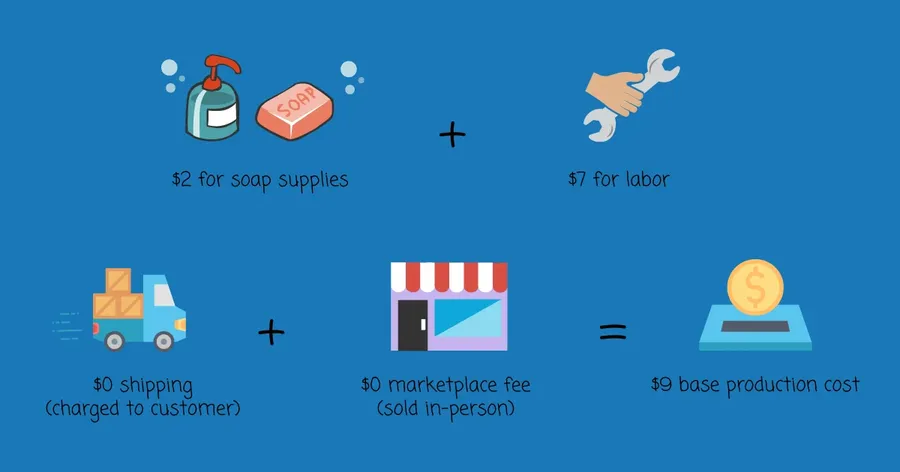
Example: If you make handmade soaps, variable cost per bar might be TZS 2,000 (ingredients + packaging). If monthly fixed costs are TZS 500,000 and you sell 500 bars, add TZS 1,000 per bar for overhead.
Step 2: Understand Different Pricing Strategies
There is no single perfect method. Here are the most common approaches small businesses use:
- Cost-plus pricing: Add a fixed markup to your total cost (simple and safe for beginners).
- Value-based pricing: Charge based on how much value the customer gets (higher margins possible if your product solves a big problem).
- Competitive pricing: Set prices close to or slightly below/above competitors.
Many successful small businesses combine strategies — using cost-plus as a floor and adjusting upward based on value or competition.
Step 3: Research Your Market and Competition
Look at what similar products sell for in your area or online. Talk to customers about what they currently pay and what they would be willing to pay for better quality or convenience. Check at least 5-10 competitors.
Consider your unique selling points — better materials, local sourcing, faster delivery, or customization can justify higher prices.
Step 4: Choose and Apply Your Pricing Strategy
Let’s use a simple example. Your total cost per product is TZS 5,000. You want a 40% gross margin.
Selling Price = Total Cost ÷ (1 - Margin %) = 5,000 ÷ (1 - 0.40) = TZS 8,333.
Round to a nice number like TZS 8,500 or 9,000 depending on your market. Always test if customers accept it.
| Strategy | Best For | Example Margin |
|---|---|---|
| Cost-Plus | Beginners, stable costs | 30-50% gross |
| Value-Based | Unique or premium products | 50-70%+ gross |
| Competitive | Crowded markets | 25-45% gross |
Step 5: Test, Monitor, and Adjust Prices
Launch with your calculated price and track sales for 1-2 months. If sales are slow, consider a small discount or bundle. If demand is strong, you may be able to raise prices slightly. Review costs and prices every 3-6 months as material costs or competition change.
Use simple tools like spreadsheets to track profit per product.
Common Pricing Mistakes to Avoid
- Only looking at material costs and forgetting overhead or marketing.
- Copying competitors without considering your own costs and value.
- Never changing prices even when costs rise.
- Pricing too low to “get more customers” — this can signal low quality.
- Ignoring psychological pricing (e.g., TZS 9,900 instead of 10,000 feels cheaper).
Pricing Tips for Small Businesses in Africa
Customers in many African markets are very price-sensitive but also value quality, convenience, and trust. Mobile money makes small price differences easy to test. Consider bundles, installment options, or loyalty discounts to increase perceived value without lowering base price too much.
Real Examples and Calculations
Example 1 (Handmade crafts): Cost per item TZS 4,000 + overhead TZS 1,500 = TZS 5,500 total. Target 45% margin → Selling price ≈ TZS 10,000.
Example 2 (Food product): High competition — use competitive pricing near market rate but add value through better packaging or local ingredients to justify slight premium.
Helpful Tools for Pricing
- Free spreadsheet templates for cost calculation
- Google Forms for quick customer price sensitivity surveys
- Accounting apps to track real costs automatically
FAQs – Pricing Products for Small Business
How often should I review my product prices?
At least every 3-6 months, or whenever major costs (materials, rent, transport) change.
What is a realistic gross profit margin for small businesses?
Most product businesses aim for 30-60% gross margin. Services can be higher (50-80%). Net profit after all expenses is usually much lower (5-20%).
Should I lower prices to get more sales?
Not always. Sometimes raising price and improving perceived value brings better profit and attracts better customers.
Conclusion
Pricing is not a one-time decision — it is an ongoing process that improves with experience and data. Start by knowing your real costs, choose a strategy that fits your business, test with real customers, and adjust regularly.
Done right, good pricing gives you healthy profits, cash flow for growth, and confidence to run your business sustainably.
Ready for the next steps? Check these helpful guides:
• How to validate a business idea before starting
• Best ways to manage small business cash flow effectively
• How to scale a small business to 6 figures fast
• How to create multiple income streams for beginners