
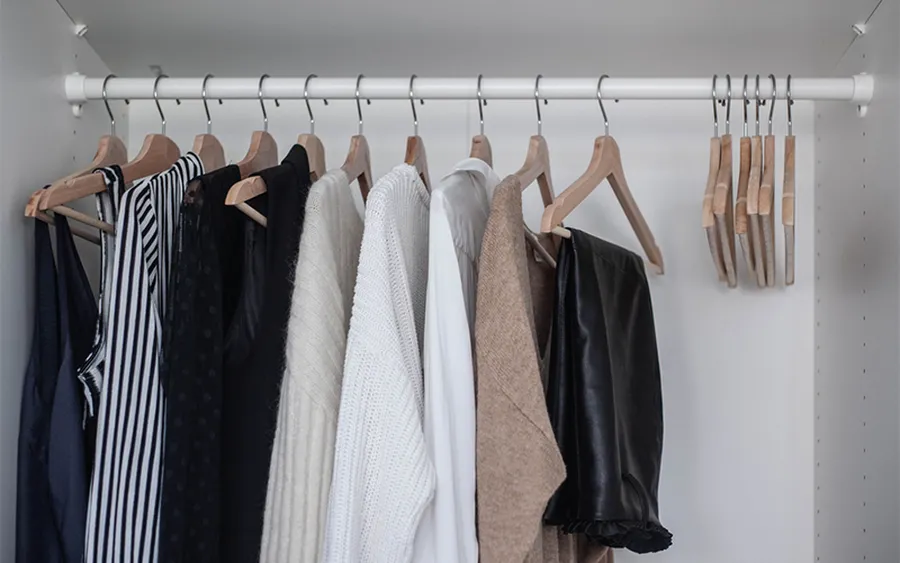
The Paradox of Choice and Fast-Fashion Waste in 2026
Do you stare at a stuffed closet and feel like you have nothing to wear? Qualitative retail audits prove that consumers wear 20% of their closet 80% of the time. Fast-fashion cycles flood our visual spaces with cheap, non-modular garments that do not fit standard lifestyle parameters. Learning how to effortlessly build a capsule wardrobe from scratch reverses this exhaustion. By capping your wardrobe items and choosing inter-connectable layers, you unlock effortless daily styling.
Quick Checklist: Steps to Purge and Rebuild
If you want to master how to effortlessly build a capsule wardrobe from scratch, you must audit your current visual inventory ruthlessly.
- The Hanger Reverse Test: Turn all your hangers backward. When you wear a garment, hang it forward. Audit what remains backward after 3 months. Compare this tracking to auditing your kitchen pantry.
- Define your lifestyle split: If you work from home, do not buy dry-clean-only visual blazers. Link this matching to lowering workplace burnout fatigue.
- Choose your neutral base: Pick navy/brown or black/grey. Do not mix both bases if you want effortless matching.
- Focus on fit parameters: If it does not fit your body today, donate it. Compare this physical fit to tracking annual health screening vitals.
Step 1: The Visual Harmony of Cohesive Colors
A modular closet only works if item A matches item B without visual clashing.
- Base Neutrals (3 Items): Trousers or jackets in black, beige, or white. Contrast this solid baseline with baselining your daily focus.
- Accent Colors (2 Items): Ties, scarves, or shirts in visual tones like olive green or rust orange.
Step 2: Fabric Longevity and Weave Integrity
Synthetic fabrics trap odors and pill quickly. Natural fibers allow skin respiration and maintain visual silhouette structural parameters.
- Summer Weaves: Linen, organic cotton, hemp. Link these breathable parameters to natural skin barrier protection.
- Winter Insulation: Merino wool, cashmere, heavy denim. Compare these heavy visual weaves to lifting heavy household weights.
Visual Checklist of Wardrobe Compartments
Let us audit the reading parameters. Below is a standard checklist table demonstrating how visual clothing categories divide across a classic 37-item capsule.
| Garment Layer | Visual Piece Count | Modular Parameter |
|---|---|---|
| Base Tops | 12-15 Pieces | Must match at least 3 bottoms |
| Bottoms & Slacks | 7-9 Pieces | Covers formal and casual use |
| Outerwear & Shoes | 10-12 Pieces | Swappable visual layering |
Frequently Asked Questions
How many items should be in a capsule wardrobe?
A standard capsule wardrobe contains between 30 and 40 items, including tops, bottoms, outerwear, and shoes. It typically excludes activewear, loungewear, and underwear.
How do I choose a color palette for my wardrobe?
Choose three neutral base colors (like black, white, navy, or beige) and two to three accent colors that complement your skin tone and can be easily mixed and matched.
Can a capsule wardrobe save me money?
Yes. By focusing on high-quality, durable visual fabrics and timeless silhouettes, you stop impulse-buying fast-fashion items that wear out quickly.
Conclusion
Mastering how to effortlessly build a capsule wardrobe from scratch returns visual calm to your mornings. By utilizing visual reading tables, equalizing fabric quotas, and caping item parameters, you command your style outcomes in 2026. Stand up right now, open your closet doors, and flip your visual hangers backward!