
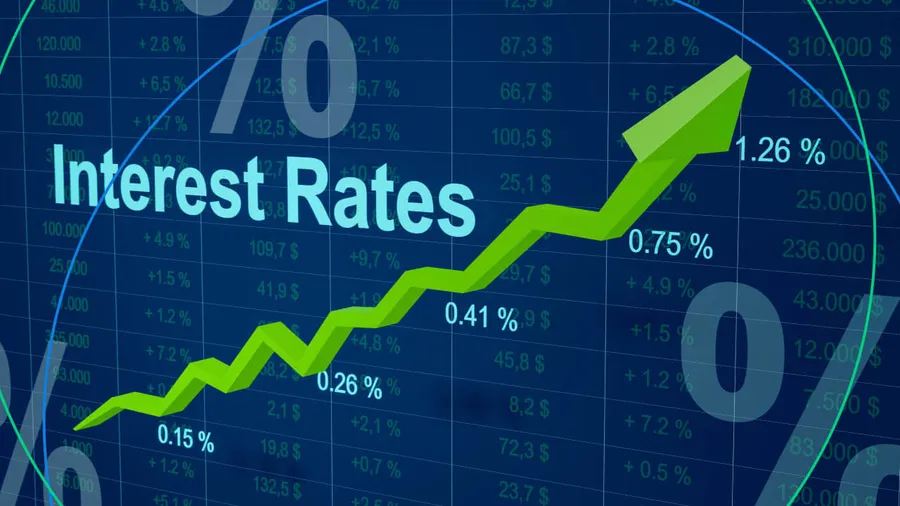
The Core Relationship: Higher Rates Usually Pressure Stocks Lower
When central banks raise interest rates, stock markets often decline or move sideways. When rates fall, stocks tend to perform better. This inverse relationship is one of the most reliable patterns in financial markets, though the strength and timing can vary.
Quick Answer: How Interest Rates Affect Stock Market Performance
Rising interest rates typically hurt stock prices by increasing borrowing costs for companies, slowing economic growth, and making safer investments like bonds more attractive. Falling rates usually support higher stock valuations by making borrowing cheaper and encouraging spending and investment. The effect is strongest on growth stocks and rate-sensitive sectors.
The Main Mechanisms – Why Rates Matter So Much
Interest rates influence the economy and markets through several channels. Higher rates make loans more expensive for businesses and households. This reduces spending on big-ticket items like homes and cars, and companies cut back on expansion projects. Lower rates do the opposite – they stimulate borrowing and economic activity.
Central banks like the Federal Reserve adjust rates to control inflation and support employment. When they raise rates to fight inflation, the stock market often feels the pressure quickly.
Impact on Company Borrowing Costs and Profits
Many companies borrow money to grow – to build factories, develop new products, or acquire competitors. When interest rates rise, their interest expenses increase, which directly reduces profits. Highly leveraged companies or those in growth phases feel this impact most strongly.
Even companies that don’t borrow much can suffer if their customers cut spending because of higher loan payments on mortgages or credit cards.
How Interest Rates Change Stock Valuations
Investors value stocks based on expected future earnings discounted back to today. Higher interest rates increase the discount rate, which lowers the present value of those future earnings. This is especially painful for growth stocks whose value depends heavily on profits far in the future.
Value stocks and companies with strong current cash flows tend to hold up better during rate-hiking periods.
Which Sectors Are Most Affected?
Rate-sensitive sectors include real estate (higher mortgage rates reduce home buying), utilities (high debt levels), and consumer discretionary (people spend less on non-essentials). Technology and growth stocks also suffer because their high valuations rely on cheap capital.
Defensive sectors like consumer staples, healthcare, and energy often perform relatively better when rates rise because demand for their products remains more stable.
Historical Patterns and Data
During aggressive rate-hiking cycles, stock markets have often experienced corrections or bear markets. In contrast, periods of falling or low rates have frequently coincided with strong bull markets. However, the relationship is not perfect – other factors like corporate earnings and economic growth also play major roles.
| Rate Environment | Typical Stock Market Impact |
|---|---|
| Rising Rates | Pressure on valuations, especially growth stocks |
| Falling Rates | Support for higher stock prices and multiples |
| Low Stable Rates | Favorable for equities over many years |
Investor Behavior and Opportunity Cost
When bond yields rise, some investors shift money from stocks to safer fixed-income investments. This selling pressure can push stock prices lower. In low-rate environments, stocks become more attractive because alternatives offer little return.
What Investors Should Do When Rates Change
Focus on companies with strong balance sheets, consistent cash flows, and pricing power. Maintain proper diversification and avoid excessive leverage. A long time horizon helps weather short-term volatility caused by rate changes.
See also our guide on difference between day trading and long term investing and how to minimize risk in stock market investments.
FAQs – How Interest Rates Affect Stock Market Performance
Do higher interest rates always cause stock market crashes?
No. Markets can continue rising if economic growth remains strong, but rising rates usually create headwinds.
Which stocks do well when interest rates rise?
Financial stocks (banks can earn more on loans), energy, and some value stocks often hold up better.
How quickly do rate changes affect the market?
Markets react almost immediately to announcements and expectations, but the full effect on the real economy takes many months.
Should I sell stocks when the Fed starts raising rates?
Not necessarily. Focus on quality companies and long-term goals rather than trying to time rate cycles.
Conclusion
Interest rates are one of the most important drivers of stock market performance. Understanding how rate changes influence borrowing costs, corporate profits, and investor decisions helps you make better investment choices and stay calm during periods of volatility.
The key is to focus on high-quality businesses, maintain diversification, and keep a long-term perspective. Rate cycles come and go, but well-run companies tend to adapt and grow over time.
For more practical investing advice, check best long term investment strategies for beginners.
Data Sources & References
Concepts drawn from standard financial theory and historical observations of Federal Reserve policy cycles. Stock market reactions are well-documented across multiple rate-hiking and rate-cutting periods. All investing involves risk. Past performance does not guarantee future results.