
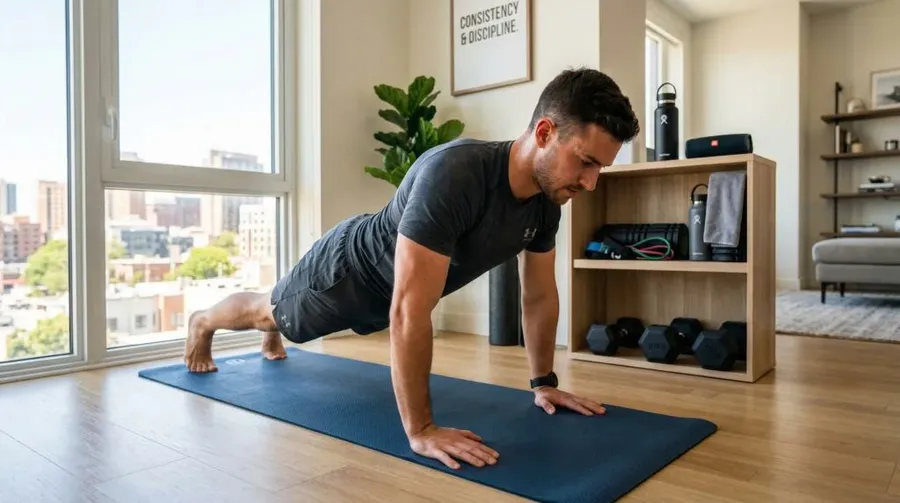
Quick Answer: Staying Consistent at Home
Schedule your workouts like important appointments, start with just 3 sessions of 20-30 minutes per week, prepare your space and clothes the night before, track every session, and focus on habit building instead of daily motivation. Most people who succeed build the routine in 4-8 weeks.
Quick Answer: How to Stay Consistent with Workout Routine at Home
Treat workouts as non-negotiable appointments. Begin with short, realistic sessions 3 times per week. Prepare everything ahead of time, track your sessions, forgive missed days quickly, and connect your training to a bigger personal reason. People who track their workouts are significantly more likely to stick with them long term.
Why Staying Consistent with Home Workouts Is So Hard
At home there are endless distractions — phone notifications, household chores, family members, or simply the comfort of your couch. Without the structure of a gym or a trainer waiting for you, it's easy to skip sessions. Many people start strong for 1-2 weeks and then slowly lose momentum when life gets busy or motivation drops.
The good news is that consistency is a skill you can learn, not something you either have or don't have.
The Right Mindset Shift for Lasting Consistency
Stop relying on motivation — it comes and goes. Instead, build systems and identity. Tell yourself “I am someone who moves my body regularly” rather than “I need to workout today.” Focus on showing up, even if the session is shorter than planned. Small consistent actions beat occasional perfect workouts every time.
How to Schedule Your Home Workouts for Success
Put your workouts in your calendar like doctor appointments. Many successful people exercise first thing in the morning before the day gets busy. Others prefer evening sessions. Choose a time that fits your life and protect it. Start with just 3 days per week so you have room for life to happen without guilt.
Pairing your workout with an existing habit (habit stacking) works very well — for example, right after your morning coffee or after dinner.
Start Small to Build Real Momentum
Begin with sessions that feel almost too easy — 20-30 minutes, 3 times per week. This reduces the mental resistance and helps you win early. As the habit becomes automatic, you can naturally increase duration or intensity. People who start too aggressively often quit within the first month.
Track Your Progress and Stay Accountable
Write down every workout you complete, even if it's short. Use a simple notebook, a habit tracker app, or mark an X on a calendar. Seeing a chain of completed days creates powerful motivation. Many studies show that people who track their exercise are about 2.5 times more likely to stick with it long term.
Take progress photos or measurements every 4 weeks. Strength gains and how your clothes fit often show results before the mirror does.
Overcoming the Most Common Obstacles
When you feel tired or unmotivated, commit to just 10 minutes. Most times you'll continue once you start. If you miss a day, get back on track the next scheduled session without self-criticism. Life will throw curveballs — travel, illness, busy periods. The winners are those who return quickly after interruptions.
Supporting Habits That Make Consistency Easier
Prepare your workout clothes and space the night before. Keep a water bottle ready. Remove friction wherever possible. Pair your workouts with something enjoyable like your favorite playlist or podcast. Celebrate small wins — completing a week, hitting a new personal best, or simply showing up on a tough day.
Combine this with a simple weekly workout plan for beginners at home to remove decision fatigue.
FAQs – Staying Consistent with Home Workouts
How many days a week should I workout to stay consistent?
Start with 3 days. It's much easier to stick with than daily workouts and still delivers great results.
What if I keep missing workouts?
Make the next session non-negotiable and shorten it if needed. Focus on getting back on track instead of perfection.
Is motivation or discipline more important?
Discipline and systems win long term. Motivation helps at the beginning, but habits carry you through the tough periods.
How do I make home workouts less boring?
Change routines every 4-6 weeks, use music or podcasts, try new exercise variations, or workout with a friend via video call.
Can beginners really stay consistent long term?
Yes. Starting small, tracking progress, and forgiving missed days helps most beginners turn exercise into a lasting lifestyle.
Conclusion – Build the Habit That Changes Everything
Staying consistent with your workout routine at home is less about willpower and more about smart systems and small daily choices. Schedule your sessions, start small, track your progress, prepare ahead, and be kind to yourself when life gets in the way. The people who succeed aren't more motivated than you — they simply have better habits and return quickly after setbacks.
Start today with just one short session. In a few weeks you'll look back and be amazed at how far you've come. Your future self — with more energy, strength, and confidence — is waiting.
Data Sources & References
Strategies based on habit formation research (including studies on exercise adherence), guidelines from fitness organizations, and real-world patterns observed in people who successfully maintain home workout routines. Individual results vary based on starting point, consistency, and lifestyle factors. Consult a healthcare professional before beginning any new exercise program.
For more fitness support, explore our fitness section .