
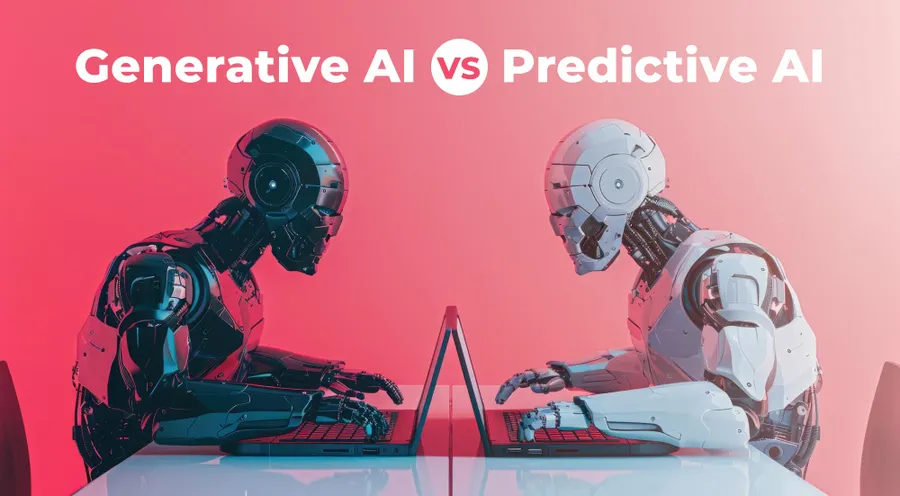
Two Different Minds in One Technology Revolution
Generative AI feels magical because it can write stories, draw pictures or compose music. Predictive AI feels invisible because it quietly guesses what you’ll click, buy or watch next. In 2026 both are everywhere — often working together.
Quick Answer: Generative AI vs Predictive AI
Generative AI creates brand new content — text, images, code, music. Predictive AI analyzes data to forecast outcomes or make classifications. ChatGPT is generative. Netflix recommendations are predictive. Many apps now use both: predictive systems decide what to show, generative systems create personalized versions.
What is Generative AI?
Generative AI learns patterns from huge amounts of existing data and then uses those patterns to create something entirely new. It doesn’t just copy — it generates original output that feels human-like.
Think of it as an extremely well-read artist who has studied millions of paintings and can now paint something fresh when you describe what you want.
What is Predictive AI?
Predictive AI looks at past data and tries to guess what will happen next or which category something belongs to. It’s excellent at spotting patterns and making probability-based forecasts.
It’s like a highly experienced weather forecaster who has seen thousands of weather patterns and can tell you with good accuracy whether it will rain tomorrow.
Generative AI vs Predictive AI – Side by Side
| Aspect | Generative AI | Predictive AI |
|---|---|---|
| Main Goal | Create new content | Predict or classify |
| Output Type | Text, images, code, music | Numbers, probabilities, categories |
| Best At | Creativity and generation | Analysis and forecasting |
| Example Tools | ChatGPT, Midjourney, Copilot | Netflix recommendations, spam filters, credit scoring |
Practical Daily Examples You Already Use
These technologies are no longer futuristic — they’re part of normal routines.
- Writing emails or reports — Generative AI (ChatGPT or Gmail’s smart reply) drafts the text for you.
- Choosing what to watch — Predictive AI (Netflix, YouTube) analyzes your history and predicts what you’ll enjoy.
- Getting shopping suggestions — Predictive AI on Amazon recommends products based on past purchases and similar customers.
- Creating social media posts or images — Generative AI turns a simple description into a polished post or artwork.
- Spam protection — Predictive AI decides in milliseconds whether an email is legitimate or junk.
If you want to improve your own productivity with these tools, check our guide on free online courses with certificates that teach practical AI skills.
Strengths and Limitations of Each
Generative AI shines when you need fresh ideas or content quickly, but it can sometimes “hallucinate” facts or produce biased output. Predictive AI is usually more reliable for decisions that need accuracy, yet it can struggle when patterns suddenly change.
In practice, the most useful systems combine both. For example, a predictive model might decide you like adventure movies, then a generative model creates a personalized trailer description.
How Generative and Predictive AI Work Together
Modern applications rarely use just one type. Predictive AI often acts as the “brain” that understands context and user needs, while Generative AI acts as the “hands” that create the actual output. This combination delivers smarter, more personalized experiences every day.
For deeper technical understanding, explore more in our AI section.
FAQs – Generative AI vs Predictive AI
What is the main difference between Generative AI and Predictive AI?
Generative AI creates new original content. Predictive AI forecasts outcomes or classifies data based on patterns.
Can Generative AI and Predictive AI work together?
Yes — many apps use predictive models to understand needs and generative models to create personalized results.
Give a daily example of Predictive AI.
Netflix suggesting shows or your phone’s autocorrect predicting the next word you’ll type.
Give a daily example of Generative AI.
Asking ChatGPT to write an email, summarize an article, or generate an image from a description.
Which type of AI is better for creative tasks?
Generative AI is designed for creativity, while Predictive AI excels at analysis and forecasting.
Conclusion – Both Types Matter
Generative AI and Predictive AI are not competitors — they are complementary tools that make technology more helpful. Predictive AI helps systems understand patterns and make smart guesses. Generative AI turns those insights into useful, creative output. Together they power the convenient digital experiences we now take for granted.
The more you understand how each works, the better you can use them in your own life — whether for work, learning or creativity. For more practical technology guides, visit our technology section.
Data Sources & References
Comparison based on established definitions from leading AI research organizations, industry reports from OpenAI, Google, Netflix engineering blogs, and practical usage patterns observed in 2025–2026 consumer applications. Examples reflect widely available tools as of early 2026.
For more helpful guides, visit our main categories page.