
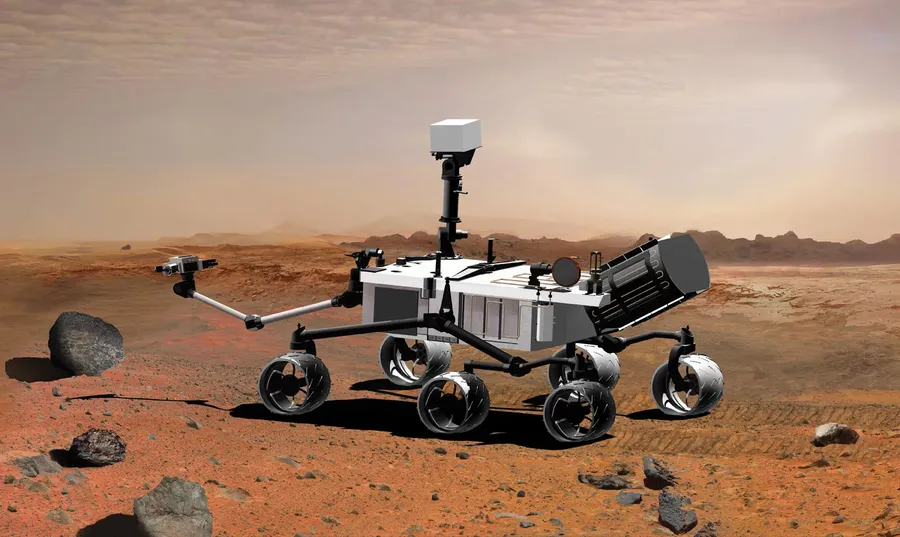
Why Mars Exploration Matters
Mars rovers help us understand the planet’s past climate, search for signs of ancient life, and test technologies needed for future human missions. The data they send back also inspires millions of people to look up at the night sky.
Quick Answer: Mars Rover Facts & Beginner Telescope Tips
NASA’s Perseverance rover is exploring Jezero Crater, collecting samples, and producing oxygen from Martian air. Curiosity continues studying Gale Crater. For beginners, a small 4–6 inch telescope can show Mars as a reddish disk with polar caps during close approaches. Mars is best viewed every 26 months during opposition.
Current Mars Rovers in 2026
Two main NASA rovers are active on Mars. Perseverance, which landed in 2021, is focused on searching for signs of ancient life and collecting rock samples for a future return mission. Curiosity, operating since 2012, continues to study the geology and climate history in Gale Crater.
Key Discoveries from Mars Rovers
- Evidence of ancient rivers, lakes, and deltas showing Mars once had liquid water on its surface.
- Organic molecules detected in rocks, though their origin (biological or not) is still being studied.
- Perseverance has successfully produced oxygen from the thin Martian atmosphere using the MOXIE instrument.
- Detailed analysis of rock layers revealing billions of years of climate changes.
Telescope Metrics for Beginners
| Telescope Size | What You Can See | Best For |
|---|---|---|
| 4–6 inch | Reddish disk, polar caps, dark markings | Beginners |
| 8+ inch | More surface detail during opposition | Enthusiasts |
Mars appears brightest and largest every 26 months during opposition, making it the best time for observation.
Simple Tips for Observing Mars
- Check when Mars is in opposition for the best view.
- Use a stable mount and let your telescope cool down outside before observing.
- Start with low magnification, then increase for more detail.
- Apps and websites can tell you the best viewing times and what features are visible.
FAQs – Mars Rover Exploration & Telescope Basics
What is the Perseverance rover doing on Mars?
It is exploring Jezero Crater, collecting samples, testing oxygen production, and searching for signs of ancient life.
How far have Mars rovers traveled?
Perseverance has driven over 30 km, while Curiosity has covered more than 30 km since landing.
What can beginners see of Mars with a telescope?
A small telescope shows Mars as a reddish disk with polar ice caps and some dark markings during good conditions.
Do I need an expensive telescope to observe Mars?
No. A modest 4–6 inch telescope is enough to see basic features and enjoy the view.
Why is Mars exploration important?
It helps us understand the planet’s history, the possibility of past life, and prepares for future human missions.
Conclusion – Mars Is Closer Than You Think
Modern Mars rovers continue to send back fascinating data about the Red Planet’s past and present. At the same time, even simple backyard telescopes let beginners connect with these discoveries by observing Mars themselves. Whether you follow the rovers online or look through a telescope, the exploration of Mars remains one of the most exciting adventures in science today.
For more science topics, visit our science section.
Data Sources & References
Facts based on NASA mission updates for Perseverance and Curiosity rovers, public image releases, and standard beginner astronomy resources for Mars observation as of 2026.
For more helpful guides, visit our main categories page.