
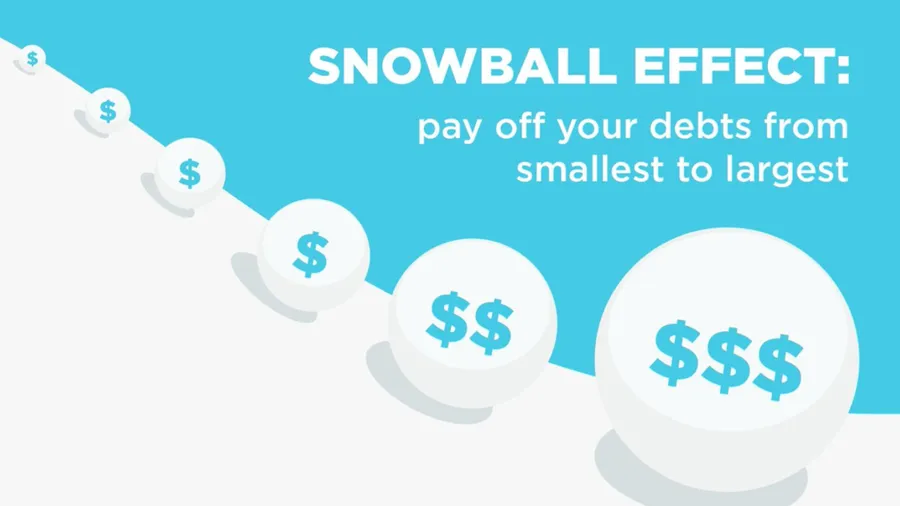
Why Psychology Beats Math in Debt Elimination
While paying high-interest rates first saves the most money mathematically, behavioral finance metrics show that clearing small balances first yields higher success rates. Knocking out a small medical bill or credit card balance triggers immediate psychological wins. In 2026, visual momentum is your ultimate weapon against fatigue.
Quick Checklist: Executing the Debt Snowball
If you want to understand how to pay off high interest debt fast using the visual snowball method, you must follow a rigid mechanical sequence.
- Establish a visual starter buffer of $1,000. Track this in your emergency fund scratch vault.
- List every liability from smallest balance to largest. Ignore interest rates for now.
- Auto-draft minimum payments on all debts except the smallest.
- Attack the smallest debt with every spare dollar from your monthly budget spreadsheet tracker.
- Roll the entire payment over to the next smallest debt once the first is dead.
Auditing Your Visual Liability Parameters
Do not estimate your debt in your head. Ground your qualitative reading by pulling actual up-to-date balances.
- Consolidate statements: Print out or download visual PDFs of your credit cards, personal loans, and retail store cards.
- Trim leakage: To throw more cash at your snowball, you must audit your low-income survival cuts and cancel unused apps.
The visual rollover mechanics
Imagine you have three debts. Debt A is $500 ($50 minimum), Debt B is $2,000 ($100 minimum), and Debt C is $5,000 ($150 minimum). You find an extra $200 in your budget.
- Month 1-2: You pay $250 ($50 min + $200 extra) on Debt A. Minimums on B and C. Debt A dies.
- Month 3+: You now roll Debt A's old capacity ($250) over to Debt B. You are now paying $350 ($100 min + $250 rolled) on Debt B. Your math snowballs! Check how this velocity compares to home business cash injection metrics.
Visual Debt Snowball Tracking Table
Let us audit the reading parameters. Below is a standard checklist demonstrating how visual ordering dictates your attack order.
| Liability Rank | Total Balance | Minimum Pay |
|---|---|---|
| Rank 1: Retail Card | $450 | $25 |
| Rank 2: Credit Card 1 | $1,200 | $45 |
| Rank 3: Personal Loan | $3,500 | $110 |
| Rank 4: Student Balance | $12,000 | $180 |
Frequently Asked Questions
What is the difference between the Debt Snowball and Debt Avalanche methods?
The Debt Snowball focuses on balance size (paying the smallest balance first for psychological wins), while the Debt Avalanche focuses on interest rates (paying the highest interest rate first to save money mathematically).
How fast can I pay off debt using the snowball method?
The speed depends on your visual budget surplus. Many households using zero-based budgeting eliminate their first small debt within 45 to 90 days, accelerating the rollover effect.
Should I pause emergency savings while paying off debt?
No. Establish a visual starter buffer of $1,000 to $2,000 first. This prevents you from swiping credit cards again if an emergency happens while you are doing the snowball.
Conclusion
Learning how to pay off high interest debt fast using the visual snowball method is about behavioral engineering. By ranking your balances, attacking small targets, and rolling over visual payment quotas, you build unbreakable momentum. List your liabilities today and throw your first snowball.