
Quick Summary
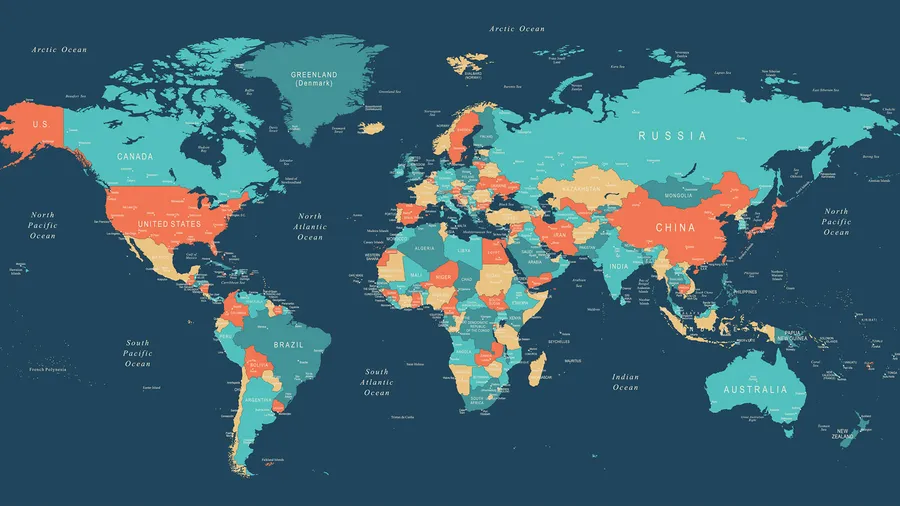
Earth has 7 continents covering 148.94 million km². Asia is the largest and most populous, while Australia is the smallest. Antarctica is the coldest and driest.
Quick Answer: Continents of the World
There are seven continents. Asia is the largest by area and population. Antarctica is the coldest and driest, while Australia is the smallest continent and also a country. These massive landmasses shape global climate, biodiversity, and human civilization.
Continents Comparison Table
| Continent | Area (million km²) | Population (approx.) | Highest Point |
|---|---|---|---|
| Asia | 44.58 | 4.8 billion | Everest (8,849 m) |
| Africa | 30.37 | 1.5 billion | Kilimanjaro (5,895 m) |
| North America | 24.71 | 600 million | Denali (6,190 m) |
| South America | 17.84 | 440 million | Aconcagua (6,961 m) |
| Antarctica | 14.00 | 0 (no permanent) | Vinson Massif (4,892 m) |
| Europe | 10.18 | 740 million | Elbrus (5,642 m) |
| Australia | 7.69 | 45 million | Kosciuszko (2,228 m) |
Asia – The Largest and Most Populous Continent
Asia covers 44.58 million km² and is home to over 4.8 billion people — more than 60% of the world's population. It contains the highest mountains (Mount Everest), the largest lake (Caspian Sea), and some of the most fertile river valleys like the Ganges and Yangtze.
Africa – The Cradle of Humanity
Africa is the second-largest continent with rich biodiversity, the Sahara (largest hot desert), the Nile (longest river), and the world's largest hot desert. It has immense mineral wealth including diamonds, gold, and cobalt.
North America – Land of Diversity
From the icy tundra of Canada to the deserts of Mexico and the tropical forests of Central America, North America features the Grand Canyon, Great Lakes, and Rocky Mountains.
South America – Home of the Amazon
The Amazon rainforest, Andes Mountains (longest mountain range), and the Atacama Desert (driest place) make South America geographically extreme. It includes the world's highest waterfall, Angel Falls.
Antarctica – The Frozen Continent
Antarctica is the coldest, driest, and windiest continent. It holds 70% of the world's fresh water in ice form and is the only continent without permanent human residents.
Europe – The Peninsula of Peninsulas
Though small, Europe has highly varied landscapes including the Alps, Mediterranean coastlines, and vast plains. It is densely populated and historically influential.
Australia – The Island Continent
Australia is both a country and continent. It features the Great Barrier Reef, vast outback deserts, and unique wildlife found nowhere else on Earth.
FAQs – Continents of the World
Is Australia a continent or a country?
Both. It is the smallest continent and also a sovereign country.
Which continent has the most countries?
Africa has 54 recognized countries.
Why is Antarctica considered a desert?
It receives very little precipitation, qualifying it as a polar desert despite being covered in ice.
Conclusion
The seven continents showcase the incredible diversity of our planet — from towering mountains and mighty rivers to frozen deserts and lush rainforests. Understanding their major features helps us appreciate how geography shapes climate, wildlife, and human societies.
Explore more with our guides on countries with largest land area, longest rivers, highest mountains, deserts of the world, and countries with most natural resources.