
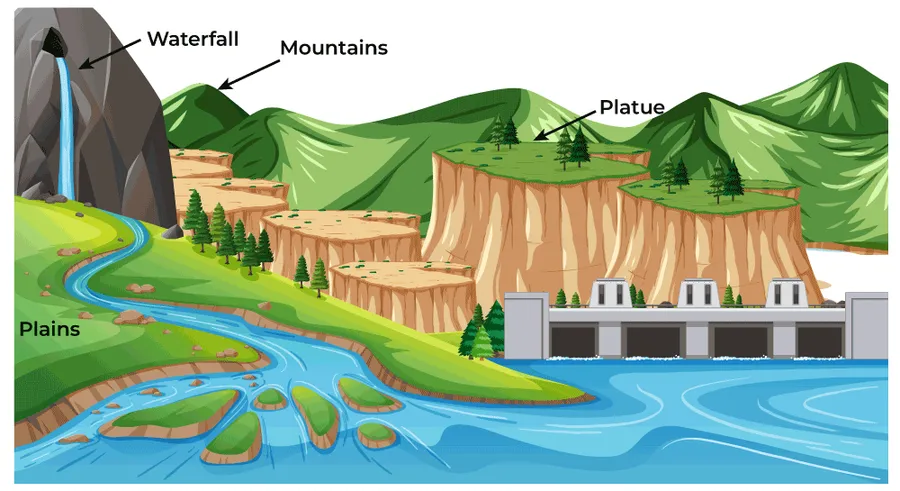
The Constant Push and Pull of Earth’s Crust in 2026
Earth’s surface is a dynamic visual puzzle. The lithosphere is broken into several massive tectonic plates riding on the semi-molten asthenosphere. Where these plates meet, continents collide, oceans open up, and volcanoes erupt. In 2026, understanding these physical geography parameters is crucial not just for academic curiosity, but for visual risk mapping of earthquakes and tsunamis.
Quick Checklist: Reading Earth's Tectonic Profile
If you want to understand a visual guide to physical Earth landforms and tectonic features, you must sort features by the forces that created them.
- Identify the boundary type: Determine if the plates are crashing, separating, or sliding.
- Note subduction parameters: Heavy oceanic plates dive beneath lighter continental plates, creating visual trenches.
- Separate endogenic from exogenic forces: Endogenic builds (volcanoes/faults), exogenic tears down (wind/rain erosion). Compare this to human populations adapting to local terrain.
- Check topographic relief: Mountain chains create orographic rain barriers.
Convergent Boundaries: Crashing Crust Parameters
When tectonic plates push into each other, the visual results are massive. The land cannot compress, so it buckles upward or plunges downward.
- Fold Mountains: Continental collisions squeeze the crust (e.g., the Himalayas). Compare this compression to running tight business overheads.
- Oceanic Trenches: Subduction zones pull the ocean floor down to extreme depths (e.g., Mariana Trench).
- Volcanic Arcs: Melting subducted crust rises to form visual island chains.
Divergent Boundaries: Tearing the Earth Apart
Magma rises from the mantle, pushing plates apart. As the crust splits, it drops to form visual valleys and new ocean floors.
[Image of divergent plate boundary rift valley]- Rift Valleys: Triple junctions tear continents apart (e.g., the East African Rift). Compare these land shifts to tracking remote digital work shifts.
- Mid-Ocean Ridges: Submarine mountain ranges where new visual crust is continuously born.
Transform Boundaries: Sliding Fault Lines
Plates slide laterally past one another. There is no visual creation or destruction of crust, but friction generates massive elastic stress.
- Strike-Slip Faults: The San Andreas Fault is a prime visual example.
- Earthquake Parameters: The sudden release of locked friction sends visual seismic waves through the lithosphere. Check standard infrastructure risk audits for these zones.
Visual Classification of Physical Earth Landforms
Let us audit the reading parameters. Below is a standard table demonstrating how visual forces translate to physical geography.
| Tectonic Force | Surface Landform Result | Visual Parameter |
|---|---|---|
| Tension (Pulling) | Rift Valley / Horst & Graben | Sunken block basins |
| Compression (Pushing) | Fold Mountains / Anticlines | Curved, layered peaks |
| Shearing (Lateral) | Offset Rivers / Fault Lines | Displaced horizontal features |
Frequently Asked Questions
What are the three main types of tectonic plate boundaries?
The three main types are Divergent (plates pulling apart), Convergent (plates colliding), and Transform (plates sliding past each other laterally).
How are fold mountains formed?
Fold mountains are formed at convergent boundaries where two continental plates collide, squeezing and buckling the crust upwards (e.g., the Himalayas).
What is the difference between a landform and a tectonic feature?
A landform is a physical feature on Earth's surface (like a hill or valley) sculpted by erosion or deposition. A tectonic feature is a direct result of internal crustal movement (like a fault line or rift valley).
Conclusion
Mastering a visual guide to physical Earth landforms and tectonic features reveals the architectural blueprint of our planet. By utilizing visual reading tables, equalizing internal forces against external weathering, and auditing plate boundaries, you remove visual blind spots in your geography studies for 2026. Pull open a topographic map today and trace the plate margins.