
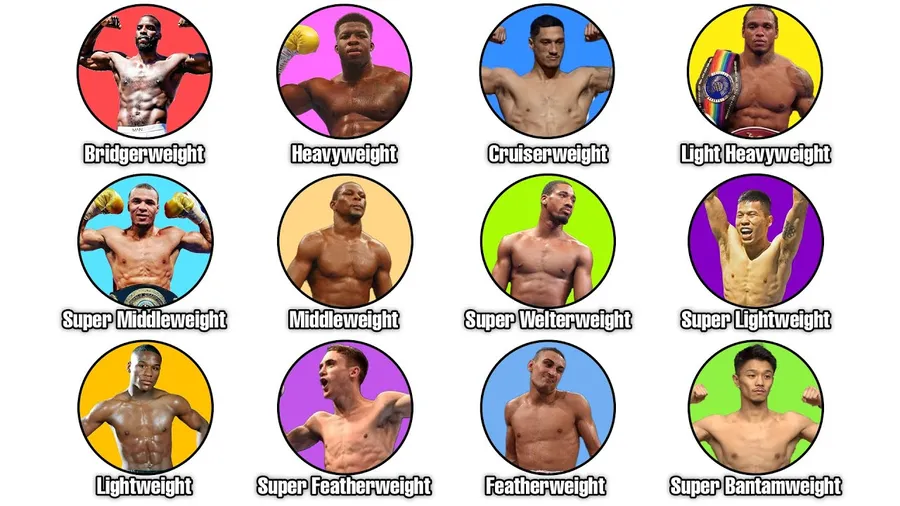
How Boxing Weight Classes Work
Professional boxing has 17 standard weight classes. Fighters must weigh in at or below the limit the day before the fight. After making weight, they can rehydrate and often enter the ring several pounds heavier. This system creates fair matchups based on size and power.
Quick Answer: Boxing Weight Classes in Order
From lightest to heaviest: Minimumweight (105 lbs), Light Flyweight (108 lbs), Flyweight (112 lbs), Super Flyweight (115 lbs), Bantamweight (118 lbs), Super Bantamweight (122 lbs), Featherweight (126 lbs), Super Featherweight (130 lbs), Lightweight (135 lbs), Super Lightweight (140 lbs), Welterweight (147 lbs), Super Welterweight (154 lbs), Middleweight (160 lbs), Super Middleweight (168 lbs), Light Heavyweight (175 lbs), Cruiserweight (200 lbs), Heavyweight (over 200 lbs).
Men's Professional Boxing Weight Classes (2026)
Here are the standard weight limits recognized by the major sanctioning bodies (WBC, WBA, IBF, WBO).
| Weight Class | Pounds Limit | Kilograms (approx.) |
|---|---|---|
| Minimumweight / Strawweight | 105 lbs | 47.6 kg |
| Light Flyweight | 108 lbs | 49.0 kg |
| Flyweight | 112 lbs | 50.8 kg |
| Super Flyweight | 115 lbs | 52.2 kg |
| Bantamweight | 118 lbs | 53.5 kg |
| Super Bantamweight | 122 lbs | 55.3 kg |
| Featherweight | 126 lbs | 57.2 kg |
| Super Featherweight / Junior Lightweight | 130 lbs | 59.0 kg |
| Lightweight | 135 lbs | 61.2 kg |
| Super Lightweight / Junior Welterweight | 140 lbs | 63.5 kg |
| Welterweight | 147 lbs | 66.7 kg |
| Super Welterweight / Junior Middleweight | 154 lbs | 69.9 kg |
| Middleweight | 160 lbs | 72.6 kg |
| Super Middleweight | 168 lbs | 76.2 kg |
| Light Heavyweight | 175 lbs | 79.4 kg |
| Cruiserweight / Junior Heavyweight | 200 lbs | 90.7 kg |
| Heavyweight | Over 200 lbs | Over 90.7 kg |
Women's Professional Boxing Weight Classes
Women's divisions follow a similar structure with some slight differences in the lighter weights. The most competitive women's classes include flyweight, bantamweight, lightweight, welterweight, and middleweight.
Many top female fighters compete across multiple divisions, similar to their male counterparts.
Most Popular and Competitive Weight Classes
- Welterweight (147 lbs) — Often called the "glamour division" with stars like Manny Pacquiao, Floyd Mayweather, and Terence Crawford.
- Lightweight (135 lbs) — Known for fast, skilled fighters and exciting matchups.
- Middleweight (160 lbs) — Features powerful punchers and technical masters.
- Heavyweight — The biggest names and highest paydays, though fewer fights due to the physical demands.
Weight Cutting, Weigh-Ins, and Important Rules
Fighters must make the exact weight limit at the official weigh-in, usually the day before the fight. Missing weight can result in fines, loss of title, or cancellation of the bout. After weighing in, boxers rehydrate and can enter the ring significantly heavier than their division limit.
Catchweight bouts are sometimes arranged when fighters cannot agree on a standard division.
FAQs – Professional Boxing Weight Classes
What is the lightest boxing weight class?
Minimumweight / Strawweight at 105 lbs (47.6 kg).
What weight class is 147 lbs?
Welterweight – one of the most prestigious and competitive divisions.
How many weight classes exist in boxing?
17 standard classes for both men and women, though some organizations recognize minor variations.
Do women have the same weight classes as men?
Very similar structure and names, with slight differences in some lower divisions.
Why do boxers move up or down in weight classes?
To find better matchups, gain size/power advantages, or extend their careers as they age.
Conclusion – Understanding Boxing Weight Classes
The professional boxing weight class system creates fair and exciting matchups by grouping fighters of similar size and power. From the lightning-fast flyweights to the massive heavyweights, each division has its own unique style and legendary champions. Knowing the order and limits helps fans better appreciate the strategy behind every fighter’s career choices.
Related Combat Sports Resources
Learn more about combat sports with our guide on how UFC fights are scored or explore strength training to support your understanding of the physical demands in boxing.
Data Sources & Notes
Weight limits reflect current standards used by the four major sanctioning bodies — WBC, WBA, IBF, and WBO — as of 2026. Slight variations may exist between organizations or for specific title fights. Always check the official rules for any upcoming bout.
For more combat sports content, visit our combat sports section.