
Quick Answer: Defending for Beginners
Stay goal-side of your opponent, keep a low balanced stance, watch the ball, communicate with teammates, and delay the attacker rather than diving in. Tackle only when sure. Good defending is mostly about smart positioning and working as a unit. Practice 1v1 situations and small-sided games to improve quickly.
Quick Answer: How to Defend Properly in Football as a Beginner
The foundation of good defending is staying between the attacker and your goal (goal-side), keeping a low balanced body position, watching the ball, and communicating with teammates. Delay the attacker by jockeying instead of rushing in. Tackle only when you are close and balanced. Practice these basics regularly and you will improve fast.
Why Good Defending Matters Even for Beginners
Teams that defend well concede fewer goals and win more matches. As a beginner, learning solid defending builds confidence, reduces mistakes, and makes you a more valuable player to any team. Good defenders are often the backbone of successful sides.
Basic Defending Stance and Body Position
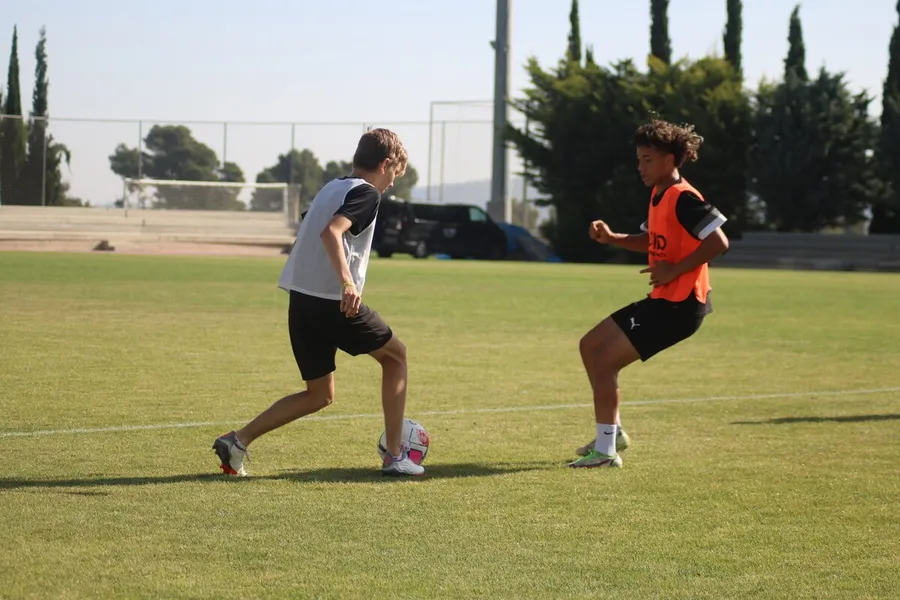
Stand with knees slightly bent, weight on the balls of your feet, and stay low. Keep your arms out for balance. This position lets you change direction quickly and react to the attacker’s movements.
Goal-Side Positioning – The Golden Rule
Always try to stay between the attacker and your goal. This forces the attacker to go around you or take a more difficult path. Never let the attacker get behind you easily.
Jockeying – How to Delay the Attacker
Instead of diving in, move sideways with the attacker while staying goal-side. Force them toward the touchline or into crowded areas. This gives your teammates time to recover and reduces dangerous situations.
When and How to Tackle Safely
Tackle only when you are sure you will win the ball. Use the inside of your foot, stay low, and follow through. Never slide from behind or when off-balance. Clean tackling wins the ball without giving away fouls.
Marking Techniques for Beginners
Stay close to your opponent without touching them until the ball arrives. Watch both the ball and the player. In zonal marking, protect your area; in man-marking, stay tight to your assigned player.
Team Defending – Working Together
Defending is a team job. Stay compact as a unit, communicate clearly (“man on”, “step up”, “drop”), and help each other. When one player presses, others cover the space behind.
Best Drills to Practice Defending as a Beginner
- 1v1 defending in a small box
- Shadow defending (mirroring attacker movements)
- 2v2 or 3v3 small-sided games with focus on shape
- Jockeying races along the touchline
Common Beginner Defending Mistakes
- Diving in too early
- Getting caught ball-watching
- Letting attackers get behind easily
- Not talking to teammates
FAQs – Defending in Football for Beginners
When is the best time to tackle?
When you are balanced, close to the player, and confident you will win the ball cleanly.
Should I always tackle or can I just delay?
Delaying (jockeying) is often smarter and safer, especially when help is nearby.
How do I improve my defending quickly?
Practice 1v1 situations regularly and focus on positioning and staying goal-side.
Conclusion: Become a Reliable Defender Step by Step
Learning how to defend properly in football as a beginner starts with good positioning, staying balanced, and working with your teammates. Master the basics first – goal-side positioning, jockeying, and clean tackling – then build from there. Consistent practice will make you a much better and more confident player.
Combine your defending skills with other fundamentals from our guides like daily training routines, football fitness exercises, and passing accuracy.
Data Sources & Further Reading
Techniques based on standard youth coaching methods and beginner development programs used by football academies worldwide.