
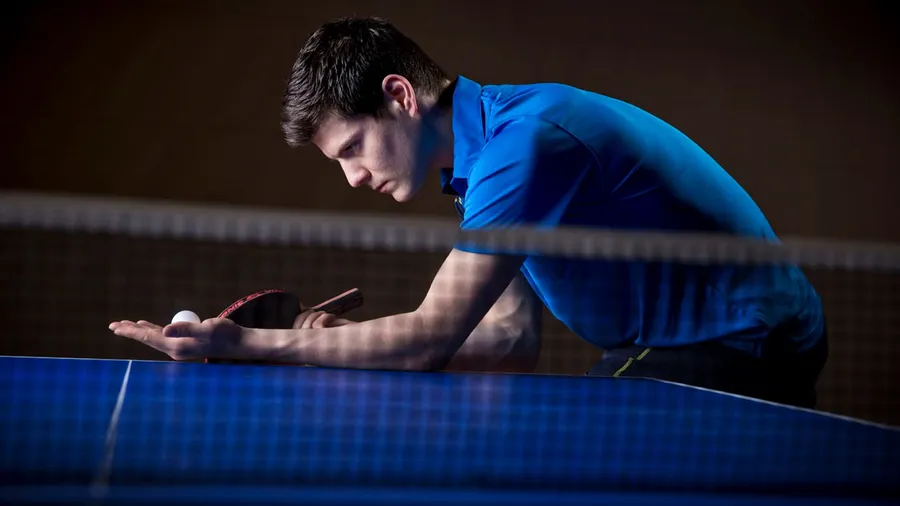
Paddle Choice Matters More Than You Think
Many players blame their technique when they lose spin or lack speed, but the paddle is often the limiting factor. Understanding rubber properties, sponge thickness, and blade stiffness helps you select equipment that matches your style and accelerates improvement.
Quick Answer: Improving Spin and Speed in Table Tennis
For maximum spin, choose tacky inverted rubber with soft sponge (1.8–2.0mm). For speed, use stiffer carbon blades with slightly harder rubber. Most players improve fastest with a balanced setup: medium-tacky rubber on an OFF- blade. Technique still matters more than equipment, but the right paddle makes good technique more effective.
Rubber Types and How They Generate Spin
The rubber is where most spin is created. Tacky Chinese-style rubbers grip the ball longer, producing heavy spin. European/Japanese rubbers offer a balance of spin and speed with a more “catapult” effect.
- High-tack rubber — Excellent for spin, slower speed
- Tensioned rubber — Good spin with built-in speed
- Short pips / long pips — Reduce opponent’s spin or create disruption
Sponge Thickness – The Speed vs Control Trade-off
| Sponge Thickness | Effect on Speed | Effect on Spin & Control |
|---|---|---|
| 1.5 – 1.8 mm | Moderate | High spin & control |
| 1.9 – 2.1 mm | Good | Balanced |
| 2.2+ mm | Very high | Less control |
Blade Construction – Stiffness and Feel
Blades range from slow, flexible all-wood to fast carbon-fiber composites. Stiffer blades transfer more energy for speed, while flexible blades give better dwell time for spin.
- ALL / ALL+ — Great for beginners, high control
- OFF- / OFF — Balanced speed and spin for most players
- OFF+ — Maximum speed, requires good technique
How to Choose the Right Paddle for Your Style
- Loopers/spin players → Tacky rubber + flexible blade
- Blockers/counter-hitters → Medium-tack rubber + stiffer blade
- All-round players → Balanced 1.9mm sponge on OFF- blade
Practical Tips to Maximize Spin and Speed
- Keep rubber clean with a dedicated cleaner or damp sponge.
- Practice brushing the ball (not hitting through it) for spin.
- Match your rubber to your blade – too fast a setup can reduce control.
- Experiment with different sponges during practice sessions.
- Focus on footwork – good positioning makes spin and speed easier.
FAQs – Table Tennis Paddle Metrics
What rubber gives the most spin?
High-tack inverted rubbers like Dignics 09C or Chinese tacky rubbers generally produce the heaviest spin.
Is thicker sponge always better for speed?
Thicker sponge increases speed and power but can reduce control and spin precision.
Should beginners use fast paddles?
No. Beginners benefit more from control-oriented paddles with medium speed to develop proper technique.
How often should I replace rubber?
Most players change rubber every 3–6 months depending on usage and how much grip is lost.
Does blade weight matter?
Yes. Heavier blades offer more power but can cause fatigue; lighter blades allow faster hand speed.
Conclusion – Equipment + Technique = Progress
The right paddle can noticeably boost your spin and speed, but it works best when paired with good technique and consistent practice. Start with a balanced setup, experiment as you improve, and always prioritize feel and control over raw power.
Small changes in rubber or sponge thickness can make a big difference once you understand how they affect the ball.
Related Indoor Sports Resources
For more indoor sports tips, visit our indoor sports category.
Data Sources & Notes
Recommendations based on common equipment used by professional and advanced amateur players, manufacturer specifications, and player feedback as of 2026. Test equipment yourself whenever possible, as feel is highly individual.
For more indoor sports content, visit our indoor sports section.