
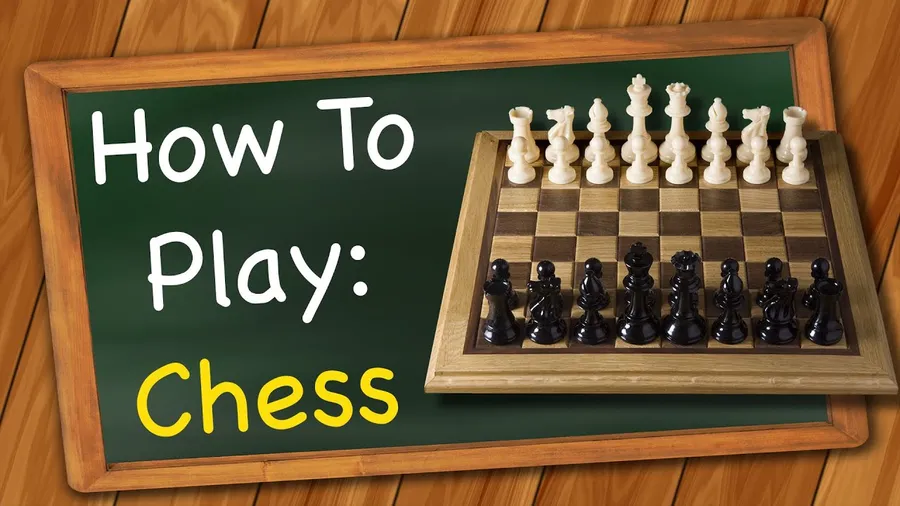
Quick Answer: How to Play Chess for Beginners
Chess is a two-player strategy game on an 8x8 board. White moves first. Each player has 16 pieces with different movement rules. The goal is to checkmate the opponent's king. Start by learning how each piece moves, then practice basic openings and tactics. Most beginners improve significantly with 10-20 hours of guided practice.
Quick Answer: How to Play Chess for Beginners
Place the board so a white square is on your right. White moves first. Learn how each piece moves: pawns forward, knights in L-shape, bishops diagonally, rooks straight, queen any direction, king one square. The game ends when one king is checkmated. Start with simple games and focus on not losing pieces for free.
Chessboard Setup and How to Read Notation
The chessboard has 64 squares in alternating light and dark colors. Files are labeled a to h (left to right for white), ranks 1 to 8 (bottom to top for white). Always place the board so the bottom-right square for each player is light-colored. Chess notation uses letters for files and numbers for ranks (e.g., e4 means moving to the e-file on the 4th rank).
How Each Chess Piece Moves – Step by Step
- Pawn: Moves forward one square (or two on first move). Captures diagonally.
- Knight: Moves in an L-shape (two squares one way, one perpendicular). Jumps over pieces.
- Bishop: Moves diagonally any number of squares.
- Rook: Moves horizontally or vertically any number of squares.
- Queen: Moves any number of squares in any direction (most powerful piece).
- King: Moves one square in any direction. Must be protected at all times.
Special Moves Every Beginner Must Know
Castling protects the king and activates the rook. En passant is a special pawn capture. Promotion happens when a pawn reaches the opposite side and turns into another piece (usually a queen).
Check, Checkmate, Stalemate and Draws
Check means the king is attacked. Checkmate means the king is in check and cannot escape. Stalemate is when a player has no legal moves but is not in check – the game is a draw. Other draws include agreement, repetition, or the 50-move rule.
Basic Strategies and Principles for Beginners
- Control the center of the board
- Develop your pieces quickly
- Castle early for king safety
- Don't move the same piece twice in the opening
- Protect your pieces and look for captures
Simple Opening Principles to Follow
Start with e4 or d4 as white. Develop knights and bishops before moving the queen or rooks. Get your king to safety with castling. These principles help you avoid early mistakes and reach a good middlegame.
Simple Tactics Beginners Should Learn
Forks (attacking two pieces at once), pins (immobilizing a piece), skewers, and discovered attacks are common tactics. Spotting these will help you win material and games.
How to Practice and Improve Quickly
Play short games against friends or online. Solve simple puzzles daily. Review your games to see mistakes. Use free online platforms to play and learn. Most beginners see big improvement after 20-30 games with focused practice.
FAQs – How to Play Chess for Beginners
How long does it take to learn chess?
Basics can be learned in one hour. Becoming decent takes 10–20 hours of practice.
Is chess hard for beginners?
The rules are simple, but the strategy takes time. Everyone starts as a beginner.
What is the best first move in chess?
e4 and d4 are the most popular and recommended for beginners.
Conclusion: Start Playing Chess Today
Chess is a wonderful game that improves concentration, planning, and problem-solving. Follow this step-by-step guide to learn the rules and basic strategies. Play regularly, solve puzzles, and enjoy the process. With consistent practice, you will improve quickly and have fun for years to come.
Combine chess with other indoor sports like table tennis or develop your physical fitness alongside mental training using guides from our football fitness and fitness section.
Data Sources & Further Reading
Content based on standard FIDE chess rules and beginner teaching methods used by chess federations and online platforms worldwide.