
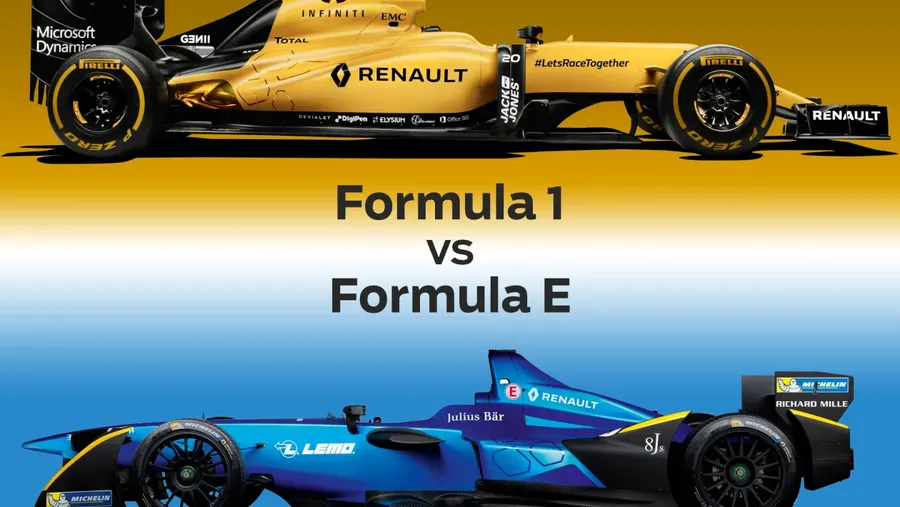
Quick Answer: Formula 1 vs Formula E
Formula 1 is the pinnacle of combustion-hybrid technology with over 1000 hp, loud engines, and extreme aerodynamics. Formula E is fully electric, quieter, uses street circuits, and focuses on energy management and sustainability. F1 offers higher top speeds and more complex engineering; Formula E delivers closer, tactical racing.
Quick Answer: Key Differences Between Formula 1 and Formula E
Formula 1 represents the ultimate in speed and hybrid technology, while Formula E showcases the future of sustainable electric motorsport with close racing on city streets. Both are exciting but deliver very different experiences.
Power and Performance Comparison
Formula 1 cars produce over 1000 horsepower from their 1.6-litre turbo-hybrid V6 engines. They reach top speeds above 370 km/h. Formula E Gen3 cars deliver around 470 hp in race mode (up to 550 hp in attack mode) with a top speed of about 280 km/h. F1 cars are significantly faster in outright speed and cornering due to advanced aerodynamics.
Sound and Fan Experience
One of the most noticeable differences is sound. Formula 1 cars have a loud, aggressive engine note that many fans love. Formula E is nearly silent, creating a unique atmosphere but sometimes criticized for lacking the traditional racing roar.
Technology and Engineering Focus
Formula 1 leads in hybrid power unit development, aerodynamics, and materials science. Formula E pushes boundaries in battery technology, electric motor efficiency, and software for energy management. Both series drive innovation that eventually reaches road cars.
Race Format and Strategy Differences
F1 races are usually 300+ km with 2-3 pit stops focused on tire strategy. Formula E races are shorter (around 45 minutes plus one lap) with no tire changes and heavy emphasis on energy management, attack mode zones, and fanboost.
Circuits and Racing Style
Formula 1 races on permanent circuits and some street tracks with high-speed corners. Formula E exclusively uses temporary street circuits, leading to tighter, more tactical racing with frequent overtaking opportunities.
Costs and Team Budgets
Formula 1 teams operate with budgets often exceeding $400 million per season. Formula E teams run on much lower budgets (around $20-30 million), making it more accessible for manufacturers and new teams.
Side-by-Side Comparison: Formula 1 vs Formula E
| Aspect | Formula 1 | Formula E |
|---|---|---|
| Power | 1000+ hp (hybrid) | ~470 hp (electric) |
| Sound | Very loud | Nearly silent |
| Top Speed | 370+ km/h | ~280 km/h |
| Circuit Type | Permanent + street | Temporary street only |
| Pit Stops | Tire changes | No tire changes |
FAQs – Formula 1 vs Formula E
Which series has faster cars?
Formula 1 cars are significantly faster in top speed and cornering.
Is Formula E the future of motorsport?
It represents the electric future, but Formula 1 continues to innovate with hybrid technology.
Which is more exciting to watch?
It depends on preference – F1 for speed and engineering, Formula E for close racing and overtaking.
Conclusion: Two Different but Exciting Forms of Motorsport
Formula 1 and Formula E represent two distinct philosophies in top-level motorsport. F1 remains the benchmark for ultimate speed and technological complexity, while Formula E leads the way in sustainable electric racing with close, tactical battles on city streets.
Both series have their place. If you enjoy raw power and engineering brilliance, Formula 1 is unmatched. If you prefer close racing and forward-thinking sustainability, Formula E delivers a unique experience. Many fans enjoy following both.
For more on how the cars work, read how Formula 1 cars work explained. To understand racing basics, see basics of car racing rules and regulations explained.
Data Sources & References
Comparison based on official FIA regulations, technical specifications from Formula 1 and Formula E, and performance data from recent seasons.