
The Core Question
Can governments borrow to invest and speed up growth, or does too much debt eventually slow the economy down? The answer depends on how much debt a country already has, what the money is spent on, and the economic environment.
Quick Answer: Effects of Government Debt on Economic Growth
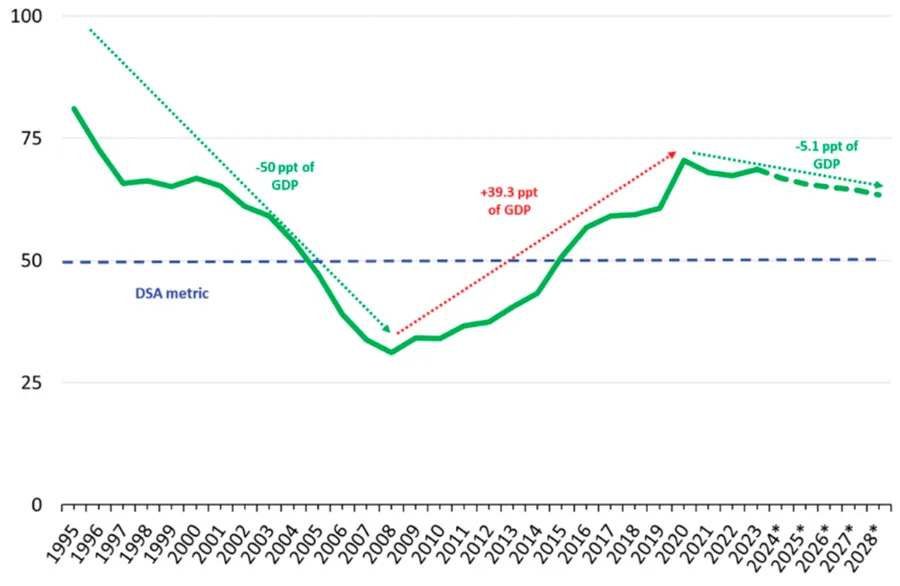
Moderate government debt used for productive investments (infrastructure, education, health) can boost long-term growth. However, when debt becomes very high – often above 70-90% of GDP in many studies – it tends to slow growth by raising interest rates, crowding out private investment, and increasing future tax burdens.
When Government Debt Supports Economic Growth
Borrowing makes sense when a country invests in things that raise future productivity. Building roads, ports, schools, or reliable electricity allows businesses to operate more efficiently and people to be more productive. In low-debt countries with good governance, this kind of spending can deliver returns higher than the cost of borrowing.
When High Government Debt Slows Growth
As debt rises, governments must pay more interest. This can push up borrowing costs for everyone in the economy. Private companies and households may borrow less or at higher rates, reducing investment and consumption. At very high levels, investors start worrying about repayment, demanding even higher interest rates or refusing to lend, which makes the situation worse.
Debt-to-GDP Thresholds – What the Research Shows
Many studies find that negative effects on growth often become visible when public debt exceeds 70-90% of GDP in advanced economies. In developing countries the threshold can be lower because markets are less forgiving and economies are more vulnerable to shocks. The exact number varies by country, but the direction is clear: beyond a certain point, extra debt tends to subtract from growth rather than add to it.
| Debt Level (Debt-to-GDP) | Typical Effect on Growth | Common Risks |
|---|---|---|
| Below 60% | Often positive if well invested | Low immediate risk |
| 60-90% | Mixed results | Rising interest burden |
| Above 90% | Usually negative | Crowding out, higher rates, slower growth |
Crowding Out – How Debt Affects Private Sector
When governments borrow heavily, they compete with private businesses for available savings. This can drive up interest rates, making it more expensive for companies to invest in new factories, equipment, or hiring. Over time this “crowding out” reduces private investment and can slow overall economic growth.
Why the Effects Are Often Stronger in Developing Countries
Developing economies usually borrow at higher interest rates and in foreign currency, making them vulnerable to exchange rate swings. They also have smaller tax bases and less developed financial markets. High debt can quickly lead to loss of investor confidence, capital flight, or forced spending cuts that hurt the poorest citizens most.
Real Country Examples
Some countries have successfully used debt to build modern infrastructure and accelerate growth. Others have seen high debt lead to crises, higher taxes, or reduced public services. The difference often comes down to whether borrowed money was invested productively and whether debt levels stayed manageable.
What Governments Can Do to Manage Debt Wisely
- Focus borrowing on high-return investments like infrastructure and education
- Maintain transparent budgeting and realistic growth projections
- Build fiscal buffers during good times to handle shocks
- Improve tax collection and broaden the tax base fairly
- Communicate clearly with markets to keep borrowing costs low
FAQs – Effects of Government Debt on Economic Growth
Is all government debt bad?
No. Debt used wisely for productive investments can support faster growth and better living standards.
What is a safe level of government debt?
There is no single magic number, but many economists watch the 70-90% debt-to-GDP range carefully for warning signs.
How does debt affect ordinary citizens?
High unsustainable debt can lead to higher future taxes, inflation, or cuts in public services that affect jobs, healthcare, and education.
Conclusion
Government debt is a powerful but double-edged tool. Used carefully for investments that raise productivity, it can accelerate economic growth and improve lives. When it becomes too high or is spent unwisely, it risks slowing growth, raising costs for everyone, and creating long-term burdens.
The key is balance, transparency, and ensuring borrowed money delivers real returns for the economy and its people.
Continue learning with these related guides:
• Impact of inflation on cost of living in developing countries
• How central banks control inflation and interest rates
• List of fastest developing countries in the world
• Pay off debt fast strategies