
Merging Traditional Climatology with Modern Data Streams in 2026
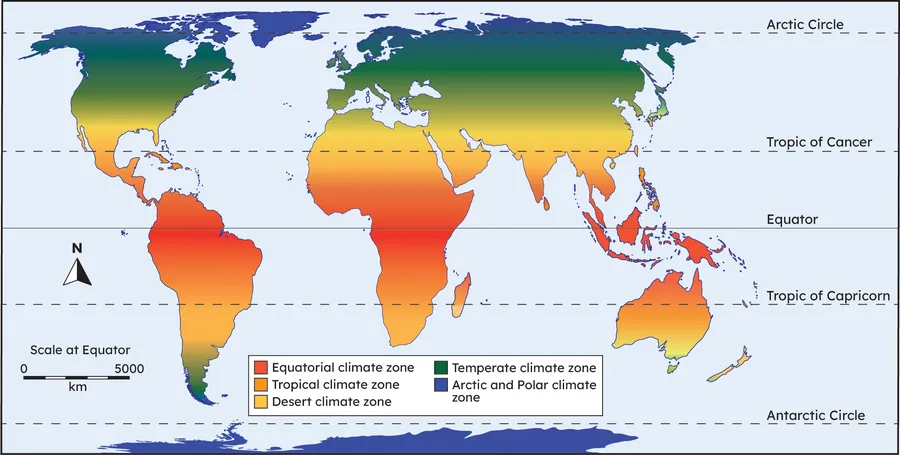
Earth's climate is not a static map. It is a live, breathing thermodynamic engine. By combining historical classification metrics with automated telemetry data streams (temperature, humidity, barometric pressure), scientists can monitor how visual boundaries between rainforests and deserts are shifting. In 2026, understanding these parameters is vital for agriculture, urban planning, and resource management.
Quick Checklist: Decoding Atmospheric Parameters
If you want to understand global climate zones parameters and weather telemetry, you must isolate long-term averages from short-term data spikes.
- Identify the Latitude Bracket: Solar angle dictates primary thermal envelopes (Tropical vs Polar).
- Differentiate Weather from Climate: Weather is today's reading; climate is the 30-year visual average.
- Filter the Sensor Array: Isolate barometric pressure, wind vector telemetry, and hygrometer readings. Compare these data streams to physical terrain rain-shadow effects.
- Audit Koppen Alphabetical Codes: Grouping regions by letter codes (Af, Bw, Cfb) removes qualitative bias.
The Primary Global Climate Classifications
Meteorologists use the Koppen-Geiger system to group regions with similar biological and thermal thresholds.
- Tropical (Group A): Equatorial zones where all months average above 18°C. Heavy visual canopy biomes.
- Dry/Arid (Group B): Evaporation exceeds precipitation. Check standard desert population adaptions for these zones.
- Temperate (Group C): Warm summers and mild winters. This zone supports major global business operations.
- Continental (Group D): Extreme seasonal swings with freezing winters and hot summers.
- Polar (Group E): Constantly cold, where no month averages above 10°C.
Telemetry: Automating Global Weather Observation
Weather telemetry is the automated wireless transmission of atmospheric readings from remote instruments to centralized databases. It removes human error from reading parameters.
- Radiosondes: High-altitude balloons measuring telemetry slices as they rise through the troposphere. Contrast these vertical slices with horizontal remote data engineering streams.
- LIDAR and Satellite Scans: Infrared visual telemetry mapping ocean temperature parameters.
- Automated Surface Stations: Sonic anemometers logging wind speeds without physical moving parts.
Visual Checklist of Weather Telemetry Parameters
Let us audit the reading parameters. Below is a standard table demonstrating how telemetry instruments translate to visual forecasting metrics.
| Telemetry Data Type | Sensor Parameter | Climatic Interpretation |
|---|---|---|
| Barometric Tendency | Pressure Δ over time (hPa) | Cyclonic vs Anticyclonic shifts |
| Psychrometric Ratio | Dry-bulb vs Wet-bulb temp difference | Dew point and rain threshold |
| Pyranometer Reading | Solar irradiance (W/m²) | Cloud fraction and thermal insulation |
Frequently Asked Questions
What is the Koppen climate classification system?
The Koppen system is a standard empirical classification that partitions global climates into five primary groups (A, B, C, D, E) based on visual vegetation biomes, monthly temperature thresholds, and annual precipitation quotas.
How does weather telemetry improve climate modeling?
Weather telemetry uses remote sensors (on weather balloons, ocean buoys, and satellites) to transmit live atmospheric data to supercomputers, removing manual reading delays and improving predictive accuracy.
What are the five main global climate zones?
The five main zones are Tropical (Equatorial), Arid (Deserts), Temperate (Mesothermal), Continental (Microthermal), and Polar (Tundra and Ice Caps).
Conclusion
Mastering the understanding of global climate zones parameters and weather telemetry reveals the live mechanics of Earth's atmosphere. By utilizing visual reading tables, equalizing sensor biases, and auditing alphabetical Koppen codes, you remove visual blind spots in your climatology studies in 2026. Log into your local national meteorological site today and analyze the live telemetry stream.