
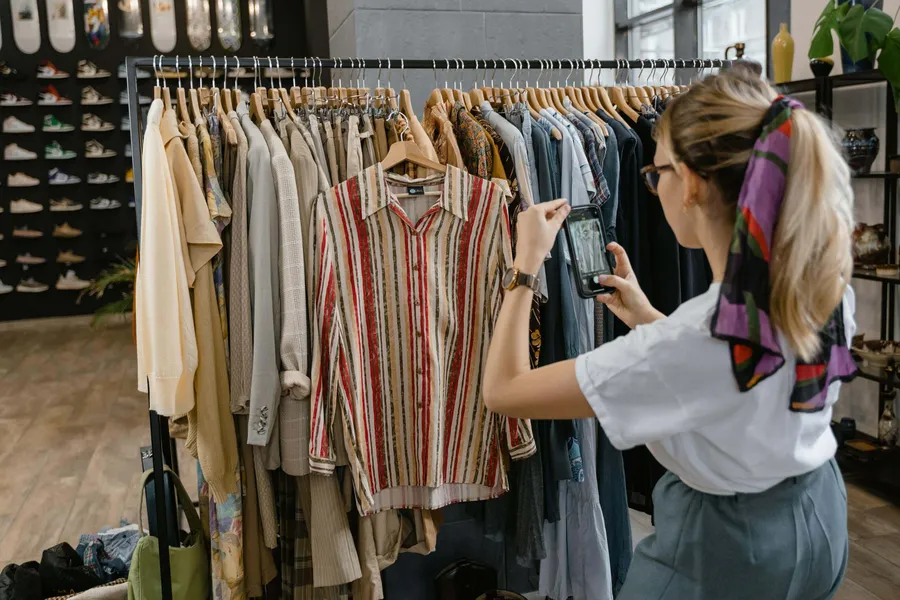
The Art of Sifting Past Fast-Fashion Clutter in 2026
Thrifting used to be a guarantee for vintage gold, but modern secondhand racks are flooded with discarded fast-fashion. Qualitative retail audits prove that modern polyester blends wear out after just 5 to 10 washes. Learning how to thrift shop for quality clothes successfully requires pivoting your visual gaze away from trendy labels and toward raw material metrics. By hunting for natural fibers and checking structural construction, you can secure luxury fabrics at sub-retail prices.
Quick Checklist: Rapid Scanning on the Racks
If you want to master successful thrifting, you must scan with your hands first and your eyes second.
- Feel the Weight: High-quality wool, denim, and cotton feel heavy and dense. Compare this physical drag to lifting heavy household weights.
- Check the Inner Tag: Ruthlessly ignore items containing more than 50% polyester, acrylic, or rayon. Link this material scan to building a modular capsule wardrobe.
- Inspect High-Friction Zones: Flip the garment inside out and check the armpits, crotch, and collars for visual pilling or staining.
- Verify Hardware Function: Zip and unzip every fly, and check if spare buttons are attached to the care tag.
Step 1: The Visual Fiber Integrity Audit
Synthetic fibers trap sweat, odors, and microplastics. Natural fibers regulate visual thermal parameters and hold their silhouette.
- Merino and Cashmere (Wool): Fire-resistant, odor-repellent, and highly durable. Contrast this warm thermal trap with summer weather outfit metrics.
- Linen and Cotton: Stronger when wet, breathable, and hypoallergenic. Link these breathable metrics to natural skin barrier wellness.
Step 2: Checking Structural Construction
Even good fabrics can be ruined by terrible construction. Look for signs that the garment was engineered to last decades, not weeks.
- The Pull Test: Gently tug a seam. If you see visual gaps between the threads, the garment will split. Compare this structural pull to morning joint mobility tension.
- Pattern Alignment: On high-quality plaid or striped shirts, the pattern matches perfectly at the seams. Contrast this precise lining with asymmetrical affordable streetwear.
Visual Checklist of Thrift Quality Metrics
Let us audit the reading parameters. Below is a standard checklist table demonstrating how visual materials hold up over time.
| Fabric Type | Visual Wear Signature | Buy or Skip Parameter |
|---|---|---|
| Heavy Denim | Zero stretch, distinct twill weave | BUY (Extremely durable) |
| Polyester Blend | Fuzzy pilling, shiny stretch | SKIP (Holds odors, sheds) |
| Pure Wool / Silk | Dry handle, tight seams | BUY (Luxury longevity) |
Frequently Asked Questions
How can I tell if a thrifted item is high quality?
Check the fabric composition label for natural fibers (wool, cotton, silk, linen). Inspect the seams for tight, double-stitching, and ensure heavy-duty metal zippers are fully functional.
What should I wear when I go thrift shopping?
Wear tight-fitting under-layers like leggings and a fitted t-shirt. Since many secondhand stores lack fitting rooms, this allows you to visually try on clothes over your current outfit.
Why is vintage sizing different from modern sizing?
Commercial sizing parameters have inflated over the decades due to vanity sizing. A vintage size 12 from the 1980s might fit exactly like a modern size 6 or 8 today.
Conclusion
Mastering how to thrift shop for quality clothes successfully unlocks a designer wardrobe without retail debt. By utilizing visual reading tables, equalizing fabric quotas, and auditing seam parameters, you command your style outcomes in 2026. Stand up right now, pull on your fitted try-on layers, and drive to your local secondhand warehouse!