
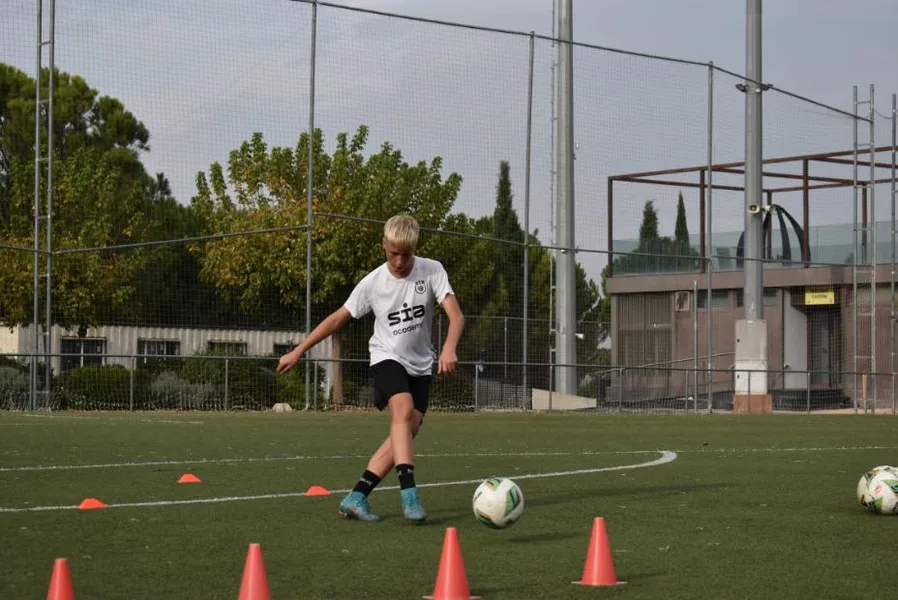
Quick Answer: Must-Learn Early Football Skills
The most important skills to learn early are: excellent first touch, accurate short passing, close ball control while dribbling, basic shooting technique with both feet, solid 1v1 defending, and simple tactical understanding (positioning and team shape). Players who master these fundamentals early develop much faster and become more coachable.
Quick Answer: Skills Every Football Player Should Learn Early
Focus on these fundamentals: perfect first touch, reliable short passing, confident close dribbling, shooting with both feet, basic defending technique, and understanding simple team shape. Spend most of your early training time on these skills through repetition and small-sided games. Players who build a strong technical base early progress much faster at higher levels.
Why Learning These Skills Early Makes a Huge Difference
The years before age 14 are the best window for developing technical skills. Good habits formed early become natural, while bad habits are much harder to fix later. Players with strong fundamentals adapt quicker to team tactics and higher-level competition.
First Touch and Ball Control – The Most Important Skill
A great first touch gives you time and space. Practice receiving the ball with different parts of the foot, while moving, and under pressure. Top players make the ball look easy to control because they spent thousands of hours on this one skill.
Passing Accuracy and Decision Making
Learn to pass accurately with both feet, especially short and medium range. Focus on weight of pass and knowing when to pass versus dribble. Good passing keeps possession and builds attacks.
Close Dribbling and Ball Mastery
Master close control so the ball stays glued to your feet. Practice inside/outside touches, sole rolls, and changes of direction. Strong dribbling helps you beat players 1v1 and create space.
Shooting Technique with Both Feet
Learn proper striking with laces for power and inside foot for accuracy. Practice from different angles and distances. Being able to shoot with both feet doubles your scoring opportunities.
Basic Defending and 1v1 Skills
Stay goal-side, keep a low stance, and learn to jockey. Tackle cleanly when the moment is right. Good defending wins games and makes you a complete player.
Simple Tactical Understanding
Learn basic formations, your position’s role, and when to press or drop. Understanding the game tactically helps you make smarter decisions on the ball.
Physical Foundations to Support Skills
Build speed, agility, balance and coordination alongside technical work. Use the exercises from our football fitness guide.
Sample Weekly Training Plan for Early Development
| Day | Focus | Duration |
|---|---|---|
| Monday | Ball Mastery + First Touch | 40 min |
| Wednesday | Passing + Dribbling | 40 min |
| Friday | Shooting + Defending 1v1 | 40 min |
| Saturday | Small-Sided Games + Fitness | 50 min |
FAQs – Skills Every Football Player Should Learn Early
How much time should I spend on technical skills?
Young players should spend most of their training time (60-70%) on ball work before age 14.
Which skill is the most important?
First touch and ball control – everything else becomes easier with a good first touch.
Should I train both feet equally?
Yes. Being comfortable with both feet gives you a big advantage.
Conclusion: Build Strong Foundations Early
The skills every football player should learn early form the foundation for everything that comes later. Master first touch, passing, dribbling, shooting, defending and basic tactics through consistent, quality practice. Players who build these fundamentals young progress faster and enjoy the game more at every level.
Use the daily routines from our beginner training plan and combine with specific skill guides on passing, dribbling, and defending.
Data Sources & Further Reading
Recommendations based on long-term player development research and coaching practices used by top youth academies worldwide.