
Quick Answer: Best Chess Strategies for Beginners
Control the center, develop your knights and bishops early, castle quickly to protect your king, don't bring the queen out too soon, avoid hanging pieces, and look for simple tactics like forks and pins. Play many games and review your mistakes. These basic principles help most beginners win far more games than random play.
Quick Answer: Best Strategies to Win in Chess for Beginners
The simplest way to win more games is to follow these rules: occupy or control the center squares (e4, d4, e5, d5), develop all your minor pieces (knights and bishops) before moving the queen or rooks, castle early, never move the same piece twice in the opening, and always check if your pieces are protected before moving. These principles alone can take you from losing most games to winning the majority against other beginners.
Opening Principles That Actually Help Beginners Win
In the first 10 moves, focus on three things: control the center, develop your pieces, and get your king safe. Good openings like 1.e4 or 1.d4 help you achieve this naturally. Avoid moving your queen or rooks early — they are powerful but get attacked easily when brought out too soon.
Fast Piece Development – Get Your Pieces into the Game
Knights and bishops should come out quickly. Knights usually go to f3/c3 or f6/c6. Bishops go to active diagonals. The faster your pieces are developed, the more pressure you put on your opponent. Players who develop slowly often lose because their pieces stay stuck on the back rank.
King Safety and Why You Should Castle Early
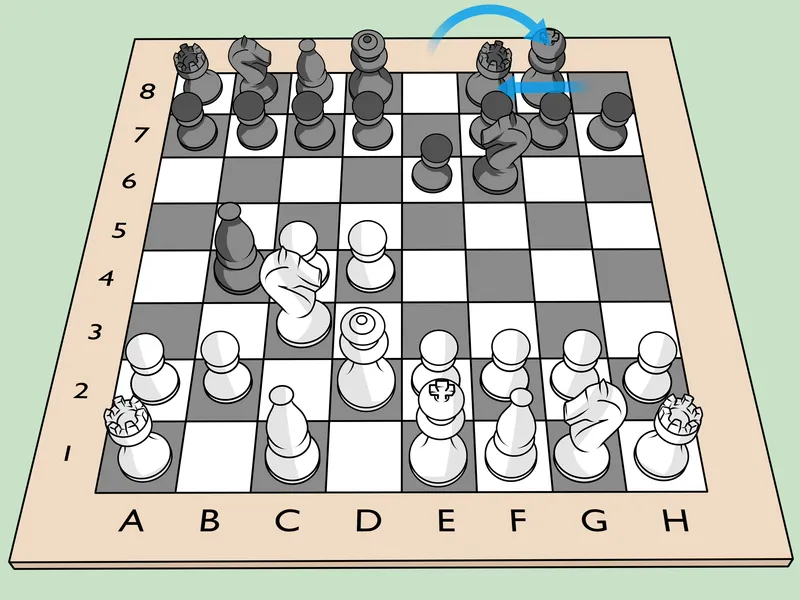
Castling moves your king to a safer corner and brings a rook into the center. Do it as soon as possible, usually by move 5-10. A king left in the center is a big target. Many beginner games are decided by a quick attack on an uncastled king.
Middlegame Strategies Beginners Can Use Immediately
Connect your rooks, keep your pieces protected, and look for ways to attack weak pawns. Try to trade pieces when you are ahead in material. Control open files with your rooks. These simple ideas work against most beginner opponents.
Simple Tactics That Win Games for Beginners
- Fork – One piece attacks two or more at the same time
- Pin – Attack a piece that cannot move without exposing a more valuable piece
- Skewer – Attack a valuable piece so it moves and you capture the one behind it
- Discovered attack – Move a piece to reveal an attack from another piece
Basic Endgame Strategies You Need to Know
In the endgame, activate your king — it becomes a strong attacking piece. Learn how to promote pawns and deliver basic checkmates with king and queen or king and rook. Many games that look equal are won by the player who knows simple endgame technique.
Common Mistakes Beginners Make (and How to Avoid Them)
- Moving the queen too early
- Not protecting pieces (hanging pieces)
- Ignoring king safety
- Making too many pawn moves in the opening
- Not looking at what the opponent is threatening
Weekly Practice Plan to Improve Fast
| Day | Activity | Time |
|---|---|---|
| Monday | Play 3-5 short games + review mistakes | 30-45 min |
| Wednesday | Solve 10-15 easy tactics puzzles | 20 min |
| Friday | Study one basic opening + play games | 40 min |
| Weekend | Longer games + endgame practice | 60 min |
FAQs – Best Strategies to Win in Chess for Beginners
How many games should a beginner play to improve?
Play at least 20-30 games while actively reviewing your mistakes. Quality matters more than quantity.
Should I memorize openings?
No. Learn principles instead. Memorizing long lines is not effective until you are much stronger.
What is the fastest way to stop losing pieces?
Always ask “what is my opponent threatening?” before every move. This single habit dramatically reduces blunders.
Conclusion: Start Applying These Strategies Today
The best strategies to win in chess for beginners are surprisingly simple: control the center, develop quickly, keep your king safe, and look for basic tactics. Focus on these principles and avoid common mistakes. With regular practice using the plan above, you will see clear improvement in just a few weeks.
Combine your chess practice with the step-by-step rules from our how to play chess for beginners guide. For physical balance, check our beginner workout plans.
Data Sources & Further Reading
Strategies drawn from standard chess teaching methods used by FIDE trainers and popular beginner platforms.