
What Is an Ecosystem?
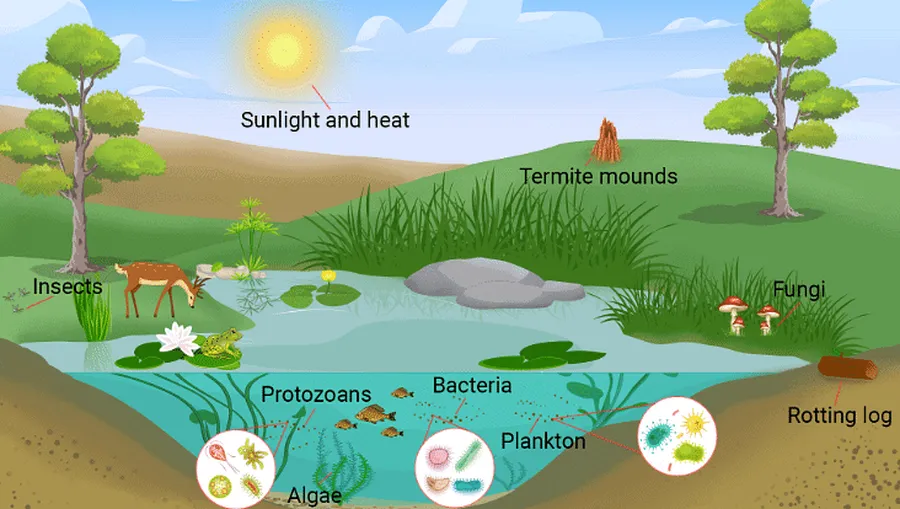
An ecosystem is a community of living things (plants, animals, bacteria) working together with non-living things (soil, water, sunlight, air) in a particular area. It can be as small as a pond or as large as a rainforest or the entire ocean.
Quick Answer: How Ecosystems Work
Ecosystems work through the interaction of living organisms and their physical environment. Energy from the sun flows through producers (plants), consumers (animals), and decomposers. Nutrients are recycled in cycles like carbon and nitrogen. Healthy ecosystems provide us with food, clean air and water, climate regulation, and countless other benefits.
Main Components of an Ecosystem
Every ecosystem has two main parts: biotic (living) and abiotic (non-living). Biotic components include producers (plants and algae that make food using sunlight), consumers (animals that eat other organisms), and decomposers (bacteria and fungi that break down dead matter). Abiotic components include sunlight, temperature, water, soil, and air. All these parts interact constantly.
How Energy Flows Through Ecosystems
Energy enters ecosystems from the sun. Plants capture about 1% of incoming sunlight through photosynthesis and turn it into chemical energy. When animals eat plants or other animals, only about 10% of that energy is passed to the next level. The rest is lost as heat. This is why food chains are usually short — there isn’t enough energy left after a few steps.
Food Chains and Food Webs
A food chain shows a simple path of who eats whom: grass → rabbit → fox. In reality, ecosystems have complex food webs where many chains connect. Removing one species (like bees) can affect many others because everything is linked. A single oak tree can support hundreds of different insect species, birds, and mammals.
Nutrient Cycles – Recycling in Nature
Unlike energy, nutrients are recycled. In the carbon cycle, plants take in carbon dioxide and release oxygen. Animals breathe out carbon dioxide. Decomposers return carbon to the soil. The nitrogen cycle is equally important — bacteria in soil and plant roots turn nitrogen gas into forms plants can use. These cycles keep ecosystems productive over long periods.
Different Types of Ecosystems
Ecosystems vary greatly: forests (tropical rainforests hold over half of Earth’s land species), grasslands, deserts, freshwater lakes and rivers, coral reefs (home to 25% of marine species despite covering less than 1% of the ocean floor), and tundra. Each has unique plants and animals adapted to its conditions.
Why Ecosystems Are Important
Ecosystems provide essential services: clean air and water, pollination for crops, soil formation, climate regulation (forests absorb huge amounts of carbon dioxide), flood protection (wetlands), and food and medicine. The value of these services is estimated in trillions of dollars every year. Healthy ecosystems also support mental well-being and cultural identity for many communities.
Human Impact and Threats to Ecosystems
Deforestation, pollution, overfishing, climate change, and habitat destruction are damaging ecosystems worldwide. For example, about 75% of the world’s coral reefs have been threatened by warming oceans and acidification. When one ecosystem collapses, it can trigger problems in others because everything is connected.
FAQs – Ecosystems Explained
What is the difference between a habitat and an ecosystem?
A habitat is the specific place where an organism lives. An ecosystem includes the living community plus the non-living environment.
Can ecosystems recover from damage?
Yes, many can recover if given time and protection, but severe damage (like complete deforestation or coral bleaching) can take decades or centuries.
How can students help protect ecosystems?
Reduce waste, plant trees, avoid single-use plastics, learn about local ecosystems, and spread awareness.
Conclusion – Protecting Our Ecosystems
Ecosystems are the foundation of all life on Earth. They recycle nutrients, flow energy, support biodiversity, and provide the clean air, water, and food we depend on. Understanding how they work helps us see why protecting them is not optional — it is essential for our own future and the health of the planet.
For more on environmental challenges, read how climate change affects the environment globally. You might also enjoy scientific method steps explained for students.
Data Sources & References
Based on ecology principles from textbooks, reports by the IPCC, WWF, and National Geographic, and current scientific consensus on ecosystem services and biodiversity.