
Your Brain in Simple Terms
The human brain is like the body's command center. It has about 86 billion neurons connected by trillions of synapses. It controls everything from breathing and heartbeat to thinking, feeling, learning, and remembering — all while using roughly 20% of your body's energy.
Quick Answer: How the Human Brain Works
The brain receives information through senses, processes it using billions of neurons, and sends signals to control your body and thoughts. Different areas handle specific jobs like movement, memory, and emotions. It constantly rewires itself through learning and experience.
Main Parts of the Human Brain
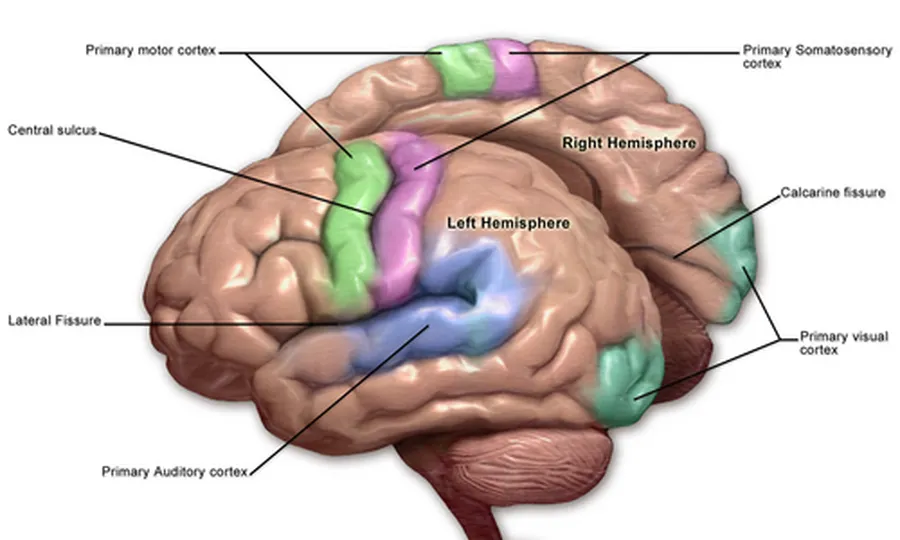
The brain has three major sections. The cerebrum is the largest part and handles thinking, problem-solving, and voluntary movements. It is divided into two hemispheres connected by the corpus callosum. The cerebellum, at the back, coordinates balance, posture, and fine movements. The brainstem connects the brain to the spinal cord and controls automatic functions like breathing, heart rate, and sleep.
How Neurons Work – The Brain's Communication System
Neurons are the brain's building blocks. Each neuron sends electrical signals along its axon and releases chemicals called neurotransmitters across tiny gaps called synapses to pass messages to other neurons. A single neuron can connect to thousands of others, creating the brain's vast network. This rapid signaling allows you to think, move, and react in fractions of a second.
Everyday Functions of the Brain
Your brain processes sights, sounds, smells, and touch constantly. The frontal lobe helps with planning and decision-making. The temporal lobe handles hearing and memory formation. The occipital lobe processes vision. The parietal lobe manages touch and spatial awareness. All these areas work together so you can read this sentence, remember what you ate for breakfast, and decide what to do next.
How Memory and Learning Happen
When you learn something new, your brain strengthens connections between neurons through a process called neuroplasticity. Short-term memory holds information for seconds to minutes. Long-term memory stores important facts and experiences for years. Repetition and emotional connection make memories stronger. That's why practicing a skill or linking new information to something you already know helps you remember better.
Emotions, Decision Making, and the Brain
The limbic system, including the amygdala, processes emotions like fear and joy. The prefrontal cortex helps control impulses and make rational decisions. When emotions run high, the amygdala can override the rational parts temporarily — that's why we sometimes react without thinking. Understanding this helps us manage stress and make better choices.
Key Brain Facts at a Glance
| Fact | Details |
|---|---|
| Number of neurons | Approximately 86 billion |
| Energy usage | About 20% of body's total energy |
| Weight | Around 1.4 kg (3 pounds) |
| Daily new connections | Thousands formed through learning |
Common Myths About the Brain
You only use 10% of your brain — false; you use most parts over the course of a day. Brain cells cannot regenerate — actually, new neurons can form in certain areas throughout life. Left-brain/right-brain dominance determines personality — oversimplified; both hemispheres work together on almost every task.
FAQs – How the Human Brain Works
How big is the human brain?
About the size of two clenched fists and weighs roughly 1.4 kilograms.
Can the brain heal itself?
Yes, through neuroplasticity it can form new connections and sometimes recover from injury.
Why do we forget things?
Forgetting helps the brain prioritize important information and make room for new learning.
Conclusion: Your Amazing Brain
The human brain is incredibly complex yet works seamlessly every second of the day. From billions of neurons firing signals to shaping your thoughts, memories, and emotions, it truly is the most remarkable organ in your body. Understanding even the basics helps you appreciate how you learn, feel, and experience the world — and reminds you to take care of it through good sleep, nutrition, exercise, and mental stimulation.
For more simple science explanations, explore simple explanation of gravity and how it works or basics of genetics dna and inheritance explained.
Data Sources & References
Based on established neuroscience from sources like textbooks on human physiology, research from institutions such as NIH and universities, and widely accepted figures (86 billion neurons, 20% energy usage).