
Vaccines – Your Body’s Training Program
Vaccines safely teach your immune system to recognize and fight dangerous germs without causing the actual disease. They have reduced many serious illnesses by over 90–99% and continue to save 4–5 million lives globally every year.
Quick Answer: How Vaccines Protect the Human Body
Vaccines introduce a safe version or part of a germ (weakened, inactivated, or just a protein). Your immune system learns to recognize it, produces antibodies, and creates memory cells. Later, if the real germ appears, your body responds fast and prevents serious illness.
Your Immune System – The Body’s Defense Army
Your immune system has two main parts: innate (fast but general) and adaptive (slower but very specific and with memory). White blood cells, especially B cells and T cells, are key players. When a new germ enters, the adaptive system studies it and creates targeted weapons (antibodies) that lock onto the germ and mark it for destruction.
How Vaccines Actually Work Step by Step
1. The vaccine delivers harmless pieces of the germ or instructions for your cells to make them. 2. Your immune system detects these as foreign and activates. 3. B cells produce antibodies that neutralize the germ. 4. Memory B and T cells are created so the next encounter is much faster and stronger. This process usually takes 1–3 weeks but provides long-lasting protection without making you sick.
Main Types of Vaccines
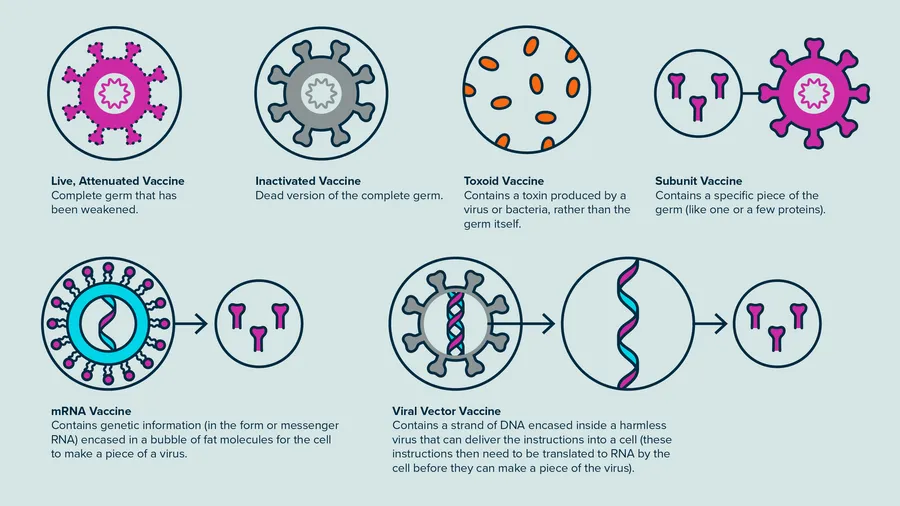
Live attenuated vaccines use a weakened live germ (e.g., measles, polio oral). Inactivated vaccines use killed germs (e.g., polio injected). Subunit or recombinant vaccines use only specific proteins (e.g., hepatitis B). mRNA vaccines (like some COVID-19 ones) give instructions to your cells to temporarily make a harmless protein. All types train immunity safely.
Vaccine Effectiveness – Real Numbers
| Disease | Reduction After Vaccination Programs |
|---|---|
| Polio | Over 99% |
| Measles | Over 95% in well-vaccinated areas |
| Smallpox | 100% – eradicated |
Common Myths vs Facts About Vaccines
Myth: Vaccines cause the diseases they prevent. Fact: Most modern vaccines cannot cause the full disease. Myth: Natural immunity is always better. Fact: Vaccines provide safer, more consistent protection without the risks of actual infection. Myth: Vaccines overload the immune system. Fact: Children encounter far more antigens daily from the environment than from vaccines.
The Real Impact of Vaccines
Vaccines have eliminated smallpox globally and nearly eliminated polio. They prevent millions of deaths yearly from diseases like measles, tetanus, and whooping cough. Beyond individual protection, high vaccination rates create herd immunity that shields those who cannot be vaccinated, such as newborns or people with weakened immune systems.
FAQs – How Vaccines Protect the Human Body
How long does vaccine protection last?
Some last a lifetime (e.g., measles), others need boosters (e.g., tetanus every 10 years).
Do vaccines have side effects?
Mild ones like soreness or low fever are common. Serious reactions are very rare.
Why do some vaccines need multiple doses?
Multiple doses build stronger and longer-lasting immunity.
Conclusion: Vaccines – One of Medicine’s Greatest Achievements
Vaccines work by safely training your immune system to recognize and defeat dangerous germs before they can cause serious harm. They are one of the most effective tools in public health, saving millions of lives every year while allowing us to live healthier, longer lives. Understanding how they work helps appreciate their value and supports informed health choices.
For more simple science topics, explore basics of genetics dna and inheritance explained or how the human brain works explained simply.
Data Sources & References
Information based on WHO, CDC, and standard immunology resources. Global lives saved annually by vaccines: approximately 4–5 million.