
Decoding the Subterranean Blueprint in 2026
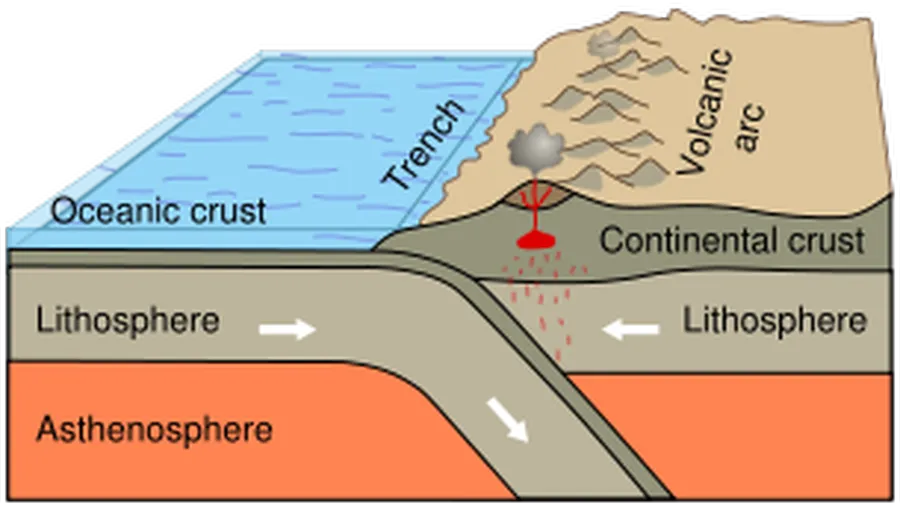
The ground beneath our feet is far from static. Tectonic plates ride on convection currents in the mantle, colliding, separating, and grinding past one another. When the friction locks these plates in place, elastic strain builds up. When the rock finally breaks, it snaps along a fault line, triggering an earthquake. In 2026, reading these geological parameters is vital for mapping out urban safety nets.
Quick Checklist: Steps to Identify Tectonic Movements
If you want to understand how to read tectonic plate movements and fault-line parameters, you must track how rock layers are displaced relative to each other.
- Identify the Stress Vector: Is the crust being pulled apart, squeezed together, or sheared sideways? Check our physical landforms guide.
- Determine the Hanging Wall and Footwall: Find the fault plane and see which block rested above the other.
- Locate Surface Scarps: Look for visible displacements or offset river bends. Combine this with tracking local rain-barrier topography.
- Differentiate hypocenter from epicenter: Hypocenter is where the snap occurs underground; epicenter is directly above it on the surface.
The Three Stress Parameters of the Crust
Fault lines are created when the crust exceeds its brittle elastic limit. This occurs due to three qualitative reading forces:
- Tension: Plates pull apart (Divergence). Stretches and thins the crust. Compare this stretch to scaling remote business branch metrics.
- Compression: Plates squeeze together (Convergence). Shortens and thickens the crust.
- Shear: Plates slide parallel in opposite directions. Grinds edges together.
Reading the Fault Lines
Once you know the stress, you can classify the fault plane. Here is how beginners read the visual displacement:
- Normal Faults: Caused by tension. The hanging wall slides down the footwall. Typical of rift zones like the East African Rift. Check regional infrastructure parameters in these zones.
- Reverse/Thrust Faults: Caused by compression. The hanging wall is shoved upward over the footwall. Common in mountain-building collision zones.
- Strike-Slip Faults: Caused by shear stress. Lateral movement with zero vertical drop.
Visual Fault Classification Parameter Matrix
Let us audit the reading parameters. Below is a standard table demonstrating how stress types correlate with fault mechanics.
| Fault Mechanical Type | Visual Block Movement | Boundary Context |
|---|---|---|
| Normal Fault | Hanging wall drops down | Divergent (Rifting) |
| Reverse / Thrust | Hanging wall rides up | Convergent (Crashing) |
| Strike-Slip / Transform | Horizontal sliding offset | Conservative (Grinding) |
Frequently Asked Questions
What is the difference between a normal fault and a reverse fault?
A normal fault is caused by tensional forces pulling the crust apart, causing one block to drop down. A reverse fault is caused by compressional forces pushing the crust together, shoving one block upward over another.
How fast do tectonic plates move?
Tectonic plates move very slowly, typically between 1 to 10 centimeters per year. This is roughly the same speed at which human fingernails grow.
Can fault lines be seen on the surface?
Yes. While many faults are buried deep underground, some break the surface as visible scarps, linear valleys, or offset streams (like the San Andreas Fault).
Conclusion
Learning how to read tectonic plate movements and fault-line parameters as a beginner bridges the gap between abstract geology and real-world hazard tracking. By utilizing visual reading tables, equalizing the hanging-wall vs footwall rules, and auditing stress vectors, you eliminate visual blind spots in your physical geography studies in 2026. Pull open a seismic map today and trace the active faults.