
From Idea to Action: The Policy Journey
Public policies shape almost every aspect of our daily lives — from education and healthcare to taxes, environment, and transportation. Understanding how these policies are created helps citizens engage more effectively and hold governments accountable.
Quick Answer: How Public Policies Are Created
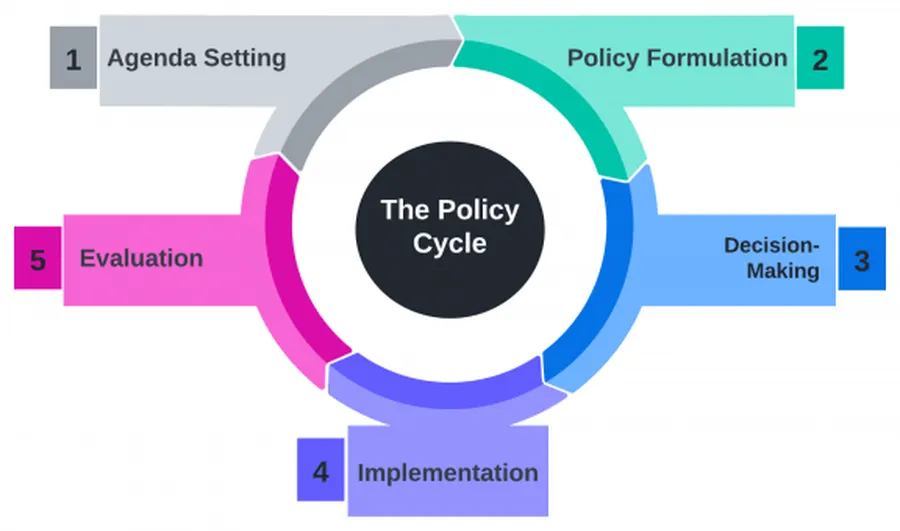
Public policies are created through a cyclical process: problem identification → agenda setting → formulation (developing options) → adoption (passing into law or regulation) → implementation (putting into practice) → evaluation (assessing results). This process involves politicians, bureaucrats, experts, interest groups, and citizens.
The Public Policy Cycle Explained
Most scholars describe policy making as a cycle rather than a straight line. Policies rarely end after implementation — evaluation often leads to revisions or entirely new policies. This iterative approach allows governments to learn and adapt over time.
Step 1: Problem Identification and Agenda Setting
Not every issue becomes a policy priority. Problems must first be recognized as public concerns (e.g., rising youth unemployment, climate change impacts, or healthcare access gaps). Media coverage, public protests, research reports, or crises often push issues onto the government agenda.
Step 2: Policy Formulation
Once on the agenda, experts and officials develop possible solutions. This stage involves research, stakeholder consultations, cost-benefit analysis, and drafting policy options. Multiple alternatives are usually considered before narrowing down to the most feasible ones.
Step 3: Policy Adoption
This is where decisions become official. In democratic systems, this often means passing legislation through parliament or issuing executive regulations. Political negotiation, compromises, and voting are central here.
Step 4: Policy Implementation
Adoption is only the beginning. Government agencies, local authorities, and sometimes private partners must translate policies into real action. This stage often reveals practical challenges such as funding shortages, staff training needs, or resistance from affected groups.
Step 5: Evaluation and Possible Revision
Governments and independent bodies assess whether the policy achieved its intended goals. Did it reduce poverty? Improve health outcomes? Protect the environment? Findings can lead to continuation, modification, or termination of the policy.
Key Actors in the Policy Process
- Elected officials and legislatures
- Government ministries and bureaucrats
- Think tanks and policy experts
- Interest groups and NGOs
- Media and public opinion
- International organizations (in some cases)
Common Challenges in Creating Public Policies
Policy making is rarely smooth. Political pressure, limited budgets, conflicting interests, incomplete information, and implementation gaps frequently complicate the process. Good policies require strong evidence, inclusive consultation, and realistic planning.
FAQs – How Public Policies Are Created Step by Step
How long does it take to create a public policy?
It varies from a few months for simple regulations to several years for complex national strategies.
Can ordinary citizens influence public policy?
Yes — through voting, petitions, public consultations, contacting representatives, and participating in advocacy campaigns.
What is the difference between policy and law?
Laws are one tool for implementing policy. Policies can also be carried out through regulations, programs, or funding decisions.
Conclusion: Understanding Policy Making Empowers Citizens
Public policy creation is a complex but essential process that determines how societies address their most pressing challenges. By understanding the steps involved — from identifying problems to evaluating outcomes — citizens can participate more meaningfully in shaping the rules that govern their lives.
Related reading: role of parliament in law making process, how checks and balances work in government, and difference between federal and unitary government systems.
Data Sources & References
Classic policy cycle models by scholars such as Harold Lasswell and James Anderson, government policy guides from various countries, and case studies from international development organizations.