
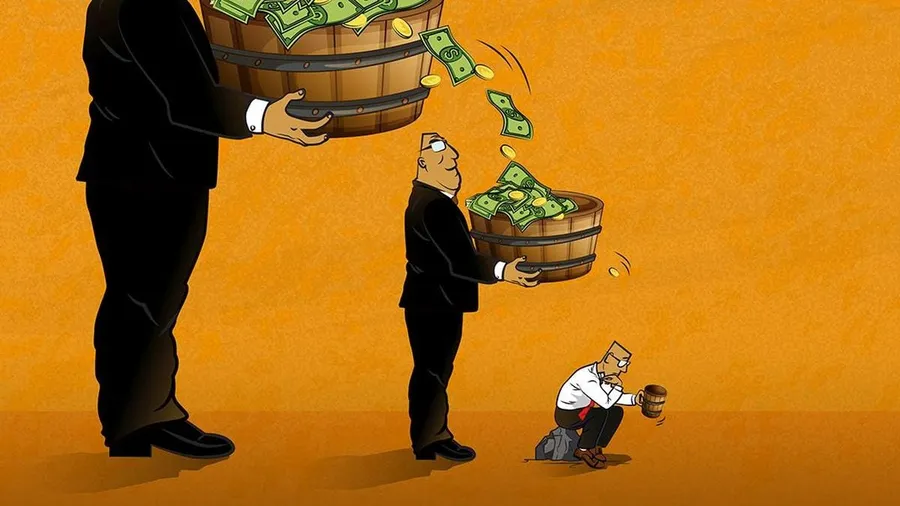
Government as Equalizer or Risk to Growth?
Income inequality has risen in many countries over recent decades. Governments play a central role in addressing it through taxes, public spending, education access, healthcare, and labor regulations. Done well, these policies can create fairer societies and stronger economies. Done poorly, they risk disincentives, inefficiency, and slower growth.
Quick Answer: Role of Government in Reducing Income Inequality
Governments reduce income inequality mainly through progressive taxation, social transfers, universal education and healthcare, minimum wage laws, and targeted anti-poverty programs. These tools can lower the Gini coefficient significantly – Nordic countries reduced it by 20–30 points through comprehensive welfare states. Effective policies improve social mobility and long-term growth by investing in human capital. However, excessive or poorly designed interventions can create work disincentives, higher taxes that slow investment, and fiscal burdens. Success depends on efficient delivery, targeting, and balancing equity with economic incentives.
Main Tools Governments Use to Reduce Inequality
- Progressive income and wealth taxes
- Redistributive spending on social programs
- Public investment in education and healthcare
- Minimum wage and labor market regulations
- Targeted cash transfers and subsidies for the poor
Progressive Taxation and Wealth Redistribution
Higher tax rates on high earners and capital gains allow governments to fund programs that benefit lower-income groups. Many OECD countries use progressive systems where the top 10% pay a disproportionately large share of income taxes. When combined with effective spending, this reduces net inequality. However, very high rates can encourage tax avoidance or reduce incentives for work and investment.
Social Spending and Safety Nets
Pensions, unemployment benefits, child allowances, and housing support directly lift lower-income households. Universal programs like public healthcare reduce the financial burden of illness, which often pushes families into poverty. Countries with generous, well-managed safety nets show lower poverty rates and more stable consumption during economic downturns.
Education as the Most Powerful Equalizer
Free or affordable quality education from early childhood through university breaks the cycle of intergenerational poverty. It increases earning potential and social mobility. Nations that invest heavily in human capital – such as Finland and South Korea – have achieved both lower inequality and strong economic performance.
Minimum Wage and Labor Market Policies
Minimum wage laws raise earnings at the bottom of the distribution. When set at reasonable levels and paired with training programs, they can reduce inequality without large job losses. Complementary policies like earned income tax credits further support low-wage workers while encouraging employment.
Key Data and Evidence
- In OECD countries, taxes and transfers reduce the Gini coefficient by an average of 0.15–0.25 points.
- Nordic countries achieve some of the lowest inequality levels (Gini around 0.25–0.28) through comprehensive public policies.
- Countries with higher public education spending as a share of GDP tend to have greater intergenerational mobility.
Country Examples and Outcomes
Nordic countries (Sweden, Denmark, Norway) combine high taxes with strong universal services and active labor market policies, maintaining low inequality while remaining highly competitive. Brazil’s Bolsa Família conditional cash transfer program significantly reduced extreme poverty. In contrast, countries with weak institutions or inefficient spending often see limited impact despite high social budgets.
Challenges and Trade-offs
Aggressive redistribution can discourage work or investment if taxes become too high or benefits too generous. Poor targeting leads to leakage where middle and upper classes capture much of the spending. Fiscal sustainability is crucial – long-term success requires balancing equity goals with economic growth and sound public finances.
FAQs – Role of Government in Reducing Income Inequality
Is reducing inequality always good for the economy?
Moderate reductions through efficient policies can support growth by boosting demand and human capital. Extreme inequality, however, can undermine growth by reducing social cohesion and mobility.
Which policy is most effective long-term?
High-quality education and skills development consistently show the strongest long-term impact on reducing inequality across generations.
Can governments reduce inequality without hurting growth?
Yes. Evidence from several high-performing economies shows it is possible when policies focus on opportunity, efficiency, and human capital rather than pure redistribution.
Conclusion: Smart Government Action Makes a Difference
Governments have powerful tools to reduce income inequality, but success depends on choosing the right mix, implementing them efficiently, and regularly evaluating results. Progressive taxation, quality public services, education investment, and well-designed labor policies can create fairer societies without sacrificing growth. The best outcomes come from focusing on equal opportunity and human capital rather than simply redistributing income. Countries that get this balance right enjoy both lower inequality and stronger, more inclusive economic performance.
Related reading: relationship between politics and economic development, how government spending affects national economy, impact of political stability on economic growth, and how minimum wage policies affect businesses and workers.
Data Sources & References
OECD Inequality reports, World Bank poverty and inequality data, IMF fiscal policy studies, academic research on redistribution and growth, and national case studies from successful welfare states.