
The Invisible Rules That Govern Nations
When countries interact — whether negotiating trade deals, responding to a pandemic, or resolving border disputes — they don’t operate in complete chaos. International law provides the framework of rules, norms, and institutions that guide behavior and help prevent or resolve conflicts. While it lacks a global police force, it influences state actions through reputation, reciprocity, and collective pressure.
Quick Answer: Role of International Law in Global Politics
International law sets rules for how countries interact. It is created through treaties (written agreements) and customary practices accepted by most nations. Major institutions include the United Nations, International Court of Justice, and World Trade Organization. It covers war, trade, human rights, environment, and diplomacy. While enforcement is imperfect, it shapes state behavior through reputation, economic incentives, and collective action.
Sources of International Law
According to Article 38 of the Statute of the International Court of Justice, the main sources are international treaties, customary international law, general principles of law recognized by civilized nations, and judicial decisions plus scholarly writings as subsidiary means. Treaties are the most straightforward — over 500 multilateral treaties are currently active. Customary law develops when states repeatedly act in a certain way and believe they are legally obligated to do so.
Key Global Institutions
- United Nations – Central platform for diplomacy and collective security.
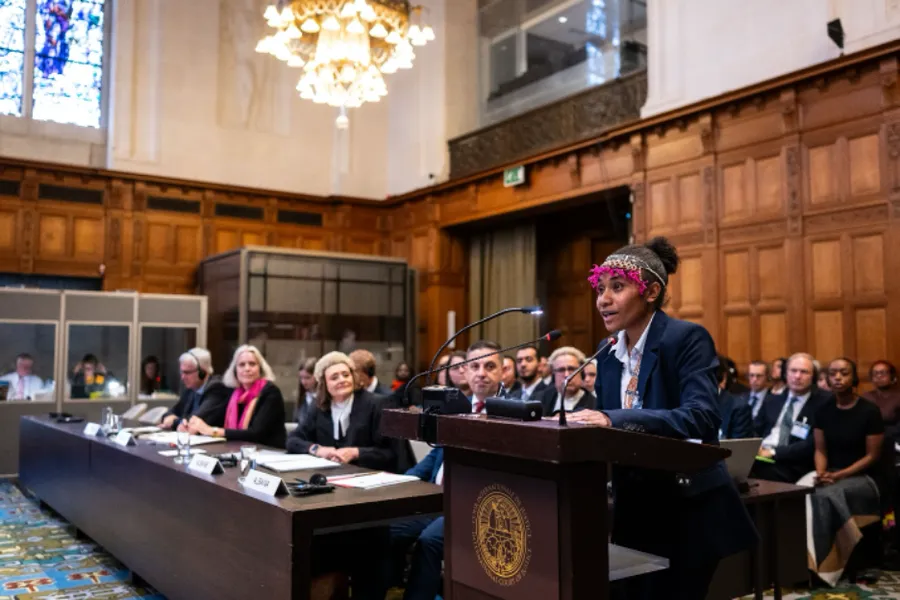
- International Court of Justice (ICJ) – Settles legal disputes between states (over 190 cases since 1946).
- International Criminal Court (ICC) – Prosecutes individuals for genocide, war crimes, and crimes against humanity.
- World Trade Organization (WTO) – Regulates global trade and resolves trade disputes.
- Specialized agencies – WHO for health, UNESCO for education and culture, IMF and World Bank for finance.
Major Areas Regulated by International Law
International law governs use of force (UN Charter prohibits aggressive war), human rights (Universal Declaration and subsequent covenants), law of the sea (maritime boundaries and navigation rights), environmental protection (Paris Agreement, biodiversity conventions), and diplomatic relations (Vienna Conventions). In trade, the WTO has resolved hundreds of disputes, preventing many from escalating into broader conflicts.
Enforcement and Compliance Mechanisms
Unlike domestic law, international law has no central enforcement body. Compliance relies on reciprocity (if you break rules, others may do the same), reputation costs, economic sanctions, and collective action through the UN Security Council. The ICJ issues binding judgments in cases where states consent, while the ICC can prosecute individuals. Soft power through public opinion and naming-and-shaming also plays a significant role.
Successes and Limitations
International law has helped eradicate smallpox, establish global postal and aviation systems, reduce ozone depletion, and create norms against chemical weapons. However, powerful states sometimes ignore rules when core interests are at stake (examples include vetoes in the Security Council or non-compliance with ICJ rulings). Enforcement remains the biggest weakness, especially regarding powerful nations.
Real-World Impact
- The UN Convention on the Law of the Sea has prevented countless maritime disputes from turning violent.
- Trade disputes resolved through the WTO have saved billions in potential retaliatory tariffs.
- International human rights law has provided standards used by courts worldwide and supported transitions to democracy.
FAQs – Role of International Law in Global Politics
Is international law really law if it can’t always be enforced?
Yes. Like constitutional law in some domestic systems, its power comes from legitimacy, shared interests, and long-term benefits rather than constant coercion.
Can a country ignore international law?
Technically yes, but doing so often carries diplomatic, economic, and reputational costs that can outweigh short-term gains.
How does international law affect ordinary citizens?
It affects trade prices, travel rules, environmental standards, human rights protections, and even access to medicines through global health regulations.
Conclusion – Foundation of Order in an Anarchical World
International law is the glue that holds global politics together. It transforms raw power politics into a rule-based system where even strong states find it useful to follow norms most of the time. While imperfect and often slow, it has created mechanisms for cooperation that would otherwise be impossible. As globalization deepens, the role of international law will only grow in importance for addressing shared challenges like climate change, pandemics, and cyber threats.
Further reading: what causes international conflicts between countries, how global organizations like united nations work, and importance of free and fair elections explained.
Data Sources & References
United Nations documents, Statute of the International Court of Justice, reports from the International Law Commission, academic studies on compliance with international law, and analyses from the Council on Foreign Relations and Chatham House.